
007
Using anaesthetic machines as ventilators during a pandemic at a district general hospital
007
007
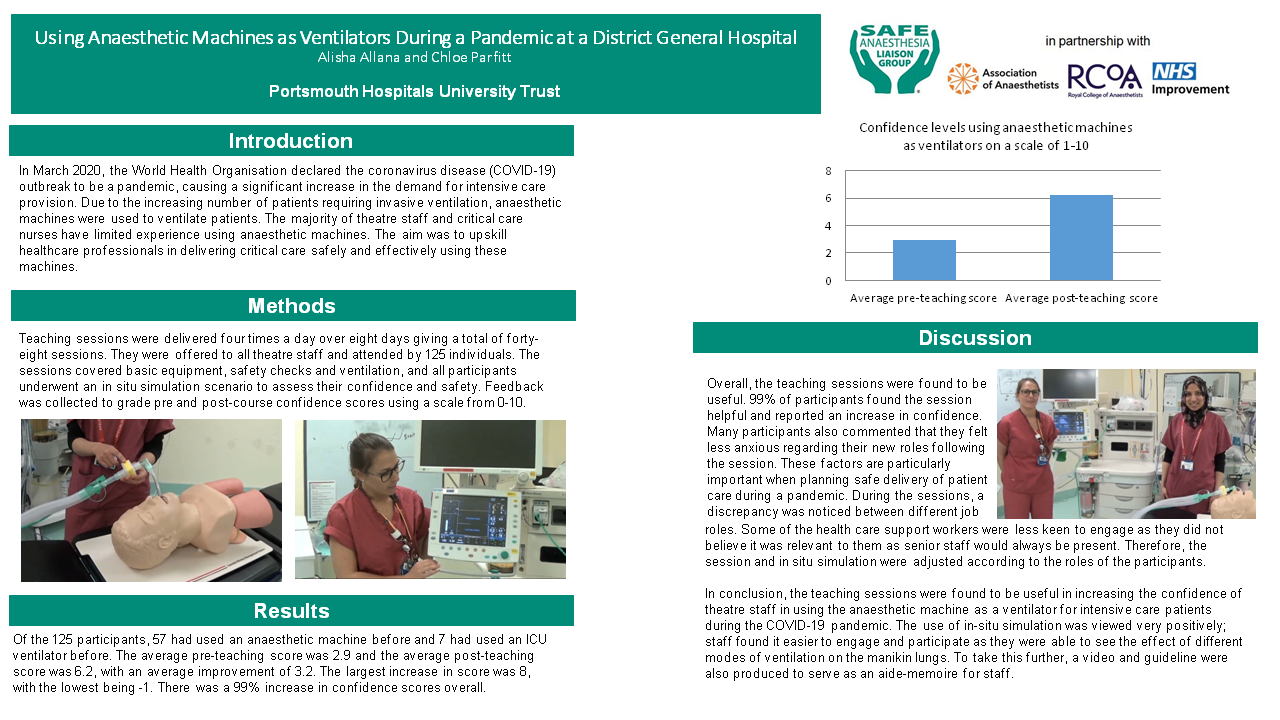
In March 2020, the World Health Organisation declared the coronavirus disease (COVID-19) outbreak to be a pandemic, causing a significant increase in the demand for intensive care provision. Due to the increasing number of patients requiring invasive ventilation, anaesthetic machines were used to ventilate patients. The majority of theatre staff and critical care nurses have limited experience using anaesthetic machines. The aim was to upskill healthcare professionals in delivering critical care safely and effectively using these machines.
Teaching sessions were delivered four times a day over eight days giving a total of forty-eight sessions. They were offered to all theatre staff and attended by 125 individuals. The sessions covered basic equipment, safety checks and ventilation, and all participants underwent an in situ simulation scenario to assess their confidence and safety. Feedback was collected to grade pre and post-course confidence scores using a scale from 0-10.
Of the 125 participants, 57 had used an anaesthetic machine before and 7 had used an ICU ventilator before. The average pre-teaching score was 2.9 and the average post-teaching score was 6.2, with an average improvement of 3.2. The largest increase in score was 8, with the lowest being -1. There was a 99% increase in confidence scores overall.
Overall, the teaching sessions were found to be useful. 99% of participants found the session helpful and reported an increase in confidence. Many participants also commented that they felt less anxious regarding their new roles following the session. These factors are particularly important when planning safe delivery of patient care during a pandemic. During the sessions, a discrepancy was noticed between different job roles. Some of the health care support workers were less keen to engage as they did not believe it was relevant to them as senior staff would always be present. Therefore, the session and in situ simulation were adjusted according to the roles of the participants.
In conclusion, the teaching sessions were found to be useful in increasing the confidence of theatre staff in using the anaesthetic machine as a ventilator for intensive care patients during the COVID-19 pandemic. To take this further, a video and guideline were also produced to serve as an aide-memoire for staff.