
005
The perceived value of just-in-time in-situ simulation training as a preparedness measure for the perioperative care of COVID-19 patients
005
005
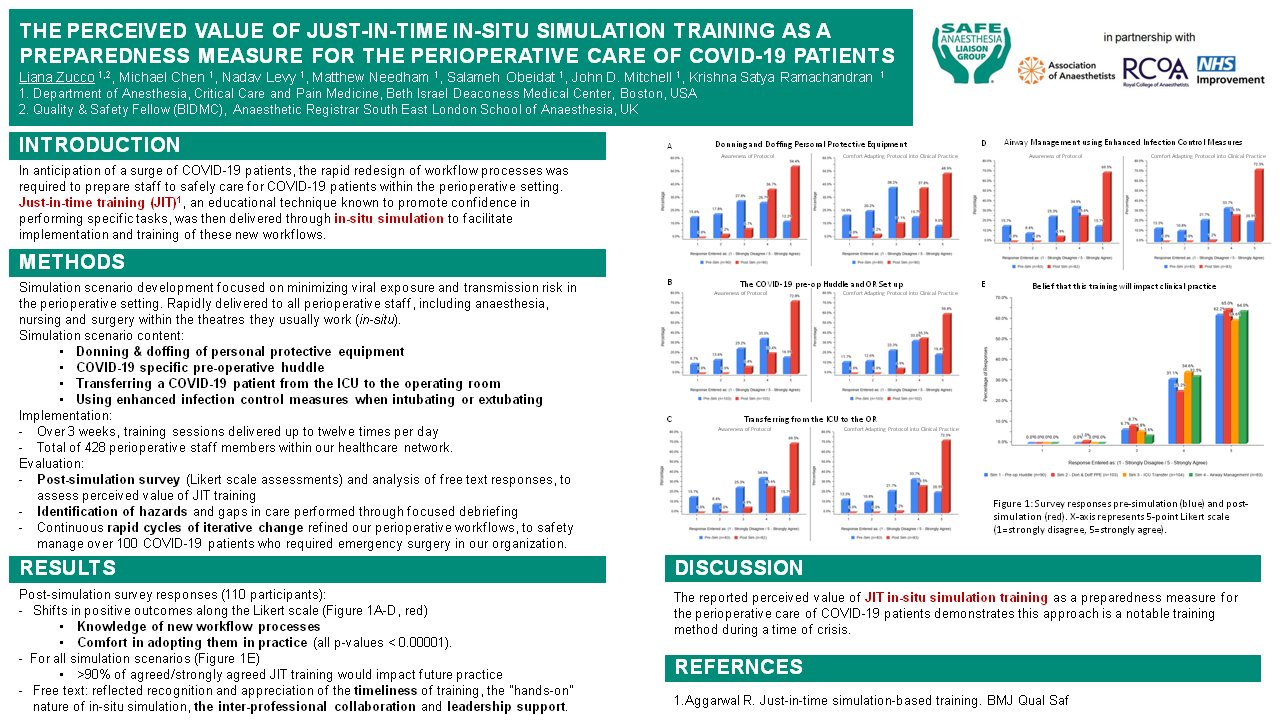
In anticipation of a surge of COVID-19 patients, the rapid redesign of workflow processes was required to prepare staff to safely care for COVID-19 patients within the perioperative setting. Just-in-time training, an educational technique known to promote confidence in performing specific tasks, was then delivered through in-situ simulation to facilitate implementation and training of these new workflows.
Simulation scenarios were developed with a focus on minimizing viral exposure and transmission risk in the perioperative setting and rapidly implemented to perioperative staff, including anaesthesia, nursing and surgery. Scenarios included donning and doffing of personal protective equipment, a COVID-19 specific pre-operative huddle, transfering a COVID-19 patient from the ICU to the operating room and using enhanced infection control measures when intubating or extubating. Over 3 weeks, training sessions were delivered up to twelve times per day to a total of 428 perioperative staff members within our healthcare network. A comprehensive evaluation of the perceived value of this training method was performed using a post-simulation survey, which collected Likert scale assessments and free text responses from 110 participants. This training method, along with debriefing, also helped identify hazards and gaps in care and through continuous rapid cycles of iterative change, enabled the refinement of perioperative workflows to safely manage nearly 100 COVID-19 patients who required emergency surgery in our organization.
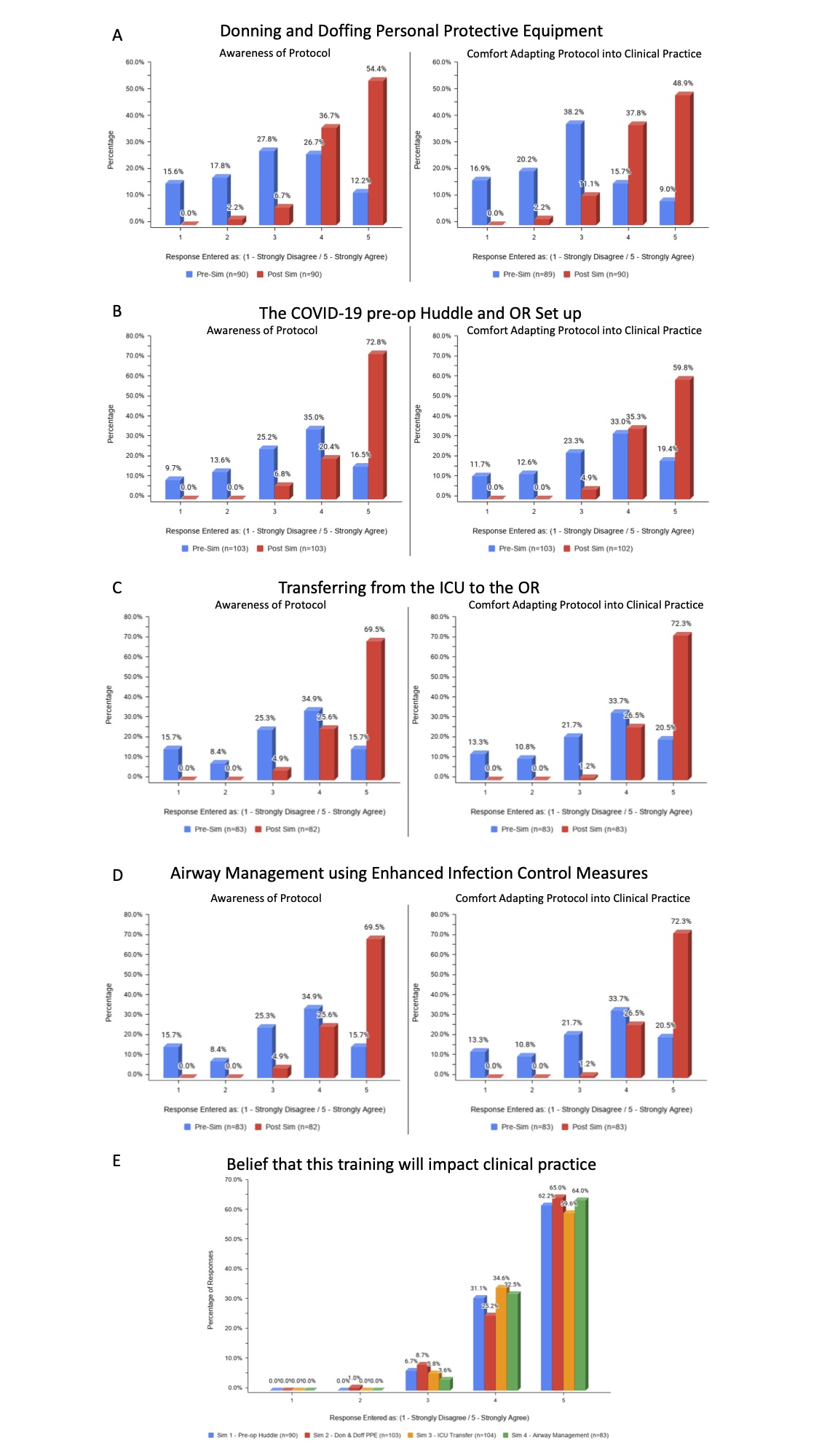
Post-simulation survey responses (Figure 1A-D, red ) demonstrated statistically significant shifts in positive outcomes along the Likert scale on knowledge of new workflow processes and comfort in adopting them in practice (all p-values < 0.00001). For all simulation scenarios, >90% of respondents agreed or strongly agreed that this method of training would have an impact on their future practice (Figure 1E). Themes within the free text responses reflected recognition and appreciation of the timeliness of this training, the "hands-on" nature of in-situ simulation, the inter-professional collaboration and leadership support. The reported perceived value of this training method as a preparedness measure for the perioperative care of COVID-19 patients demonstrates this approach is a notable training method during a time of crisis.