046
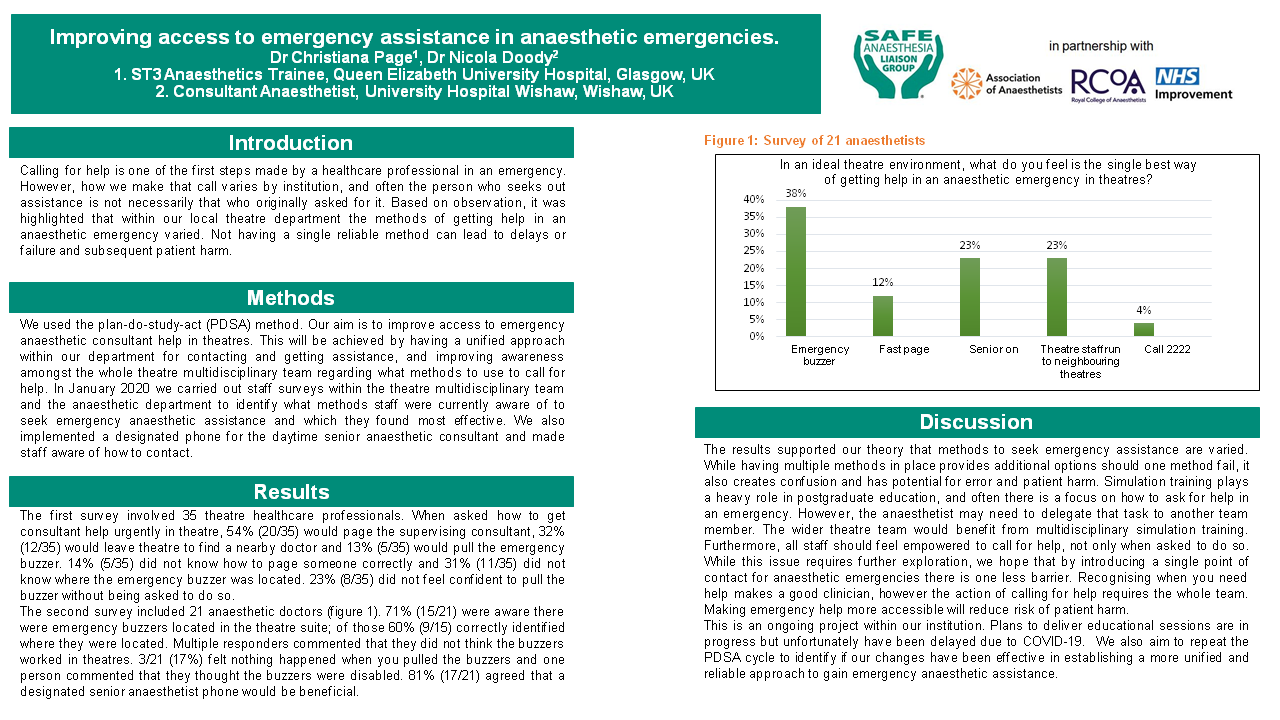
Calling for help is one of the first steps made by a healthcare professional in an emergency. However, how we make that call varies by institution, and often the person who seeks out assistance is not necessarily that who originally asked for it. Based on observation, it was highlighted that within our local theatre department the methods of getting help in an anaesthetic emergency varied. Not having a single reliable method can lead to delays or failure and subsequent patient harm. We decided to evaluate this further using the plan-do-study-act method. Our aim was to improve access to emergency anaesthetic consultant help in theatres. We carried out staff surveys within the theatre multidisciplinary team and the anaesthetic department.
The first survey involved 35 theatre healthcare professionals. When asked how to get consultant help urgently in theatre, 54% would page the supervising consultant, 32% would leave theatre to find a nearby doctor and 13% would pull the emergency buzzer. 14% did not know how to page someone correctly and 31% did not know where the emergency buzzer was located. 23% did not feel confident to pull the buzzer without being asked.
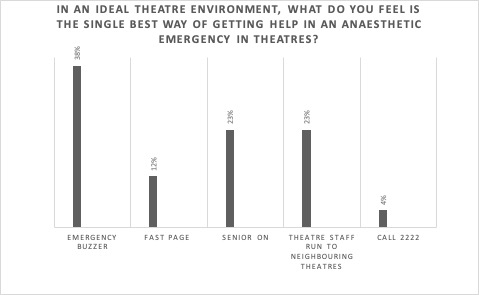
b Survey results of 21 anaesthetists.
The second survey included 21 anaesthetic doctors (figure 1). 81% felt a designated senior anaesthetist phone would be beneficial. Based on these results, we implemented a designated phone for the daytime senior anaesthetic consultant. Plans to deliver educational sessions are in progress but unfortunately have been delayed due to COVID-19.
The results supported our theory that methods to seek emergency assistance are varied. Simulation training plays a heavy role in postgraduate education, and often there is a focus on how to ask for help in an emergency. However, the anaesthetist may need to delegate that task to another team member. The wider theatre team would benefit from multidisciplinary simulation training. Furthermore, all staff should feel empowered to call for help, not only when asked to do so. While this issue requires further exploration, we hope that by introducing a single point of contact for anaesthetic emergencies there is one less barrier. Recognising when you need help makes a good clinician, however the action of calling for help requires the whole team. Making emergency help more accessible will reduce risk of patient harm.