

Poster no: 005
An audit of acute postoperative pain scores and intra-operative analgesia in thoracic surgery
Poster no: 005
005
Prompt recognition and correction of acute pain is a high priority for post-operative surgical patients [1]. Acute pain after thoracic surgery, however, remains a common occurrence. There is often inconsistency in the intra-operative and postoperative pain management in this patient cohort. Here, we evaluated the choice of intra-operative analgesia and acute post-operative pain scores in patients who have undergone thoracic surgery.
Methods
We retrospectively audited patients who underwent thoracic surgery at the Essex Cardiothoracic Centre, Basildon. Data was collected on 26 patients from October to December 2022. The audit standard was minimal patient-reported pain scores during the recovery period, as defined by the numerical rating scale (NRS) [2]. Recovery nurses scored pain at rest and with deep breathing (DB) at three timepoints: admission, 1-hour post-operative and on discharge from the recovery suite. Data was additionally collected on the surgical approach used and the type of analgesia administered intra-operatively. Statistical analysis using the Mann-Whitney U test was employed to examine the difference in pain scores between modalities.
Results
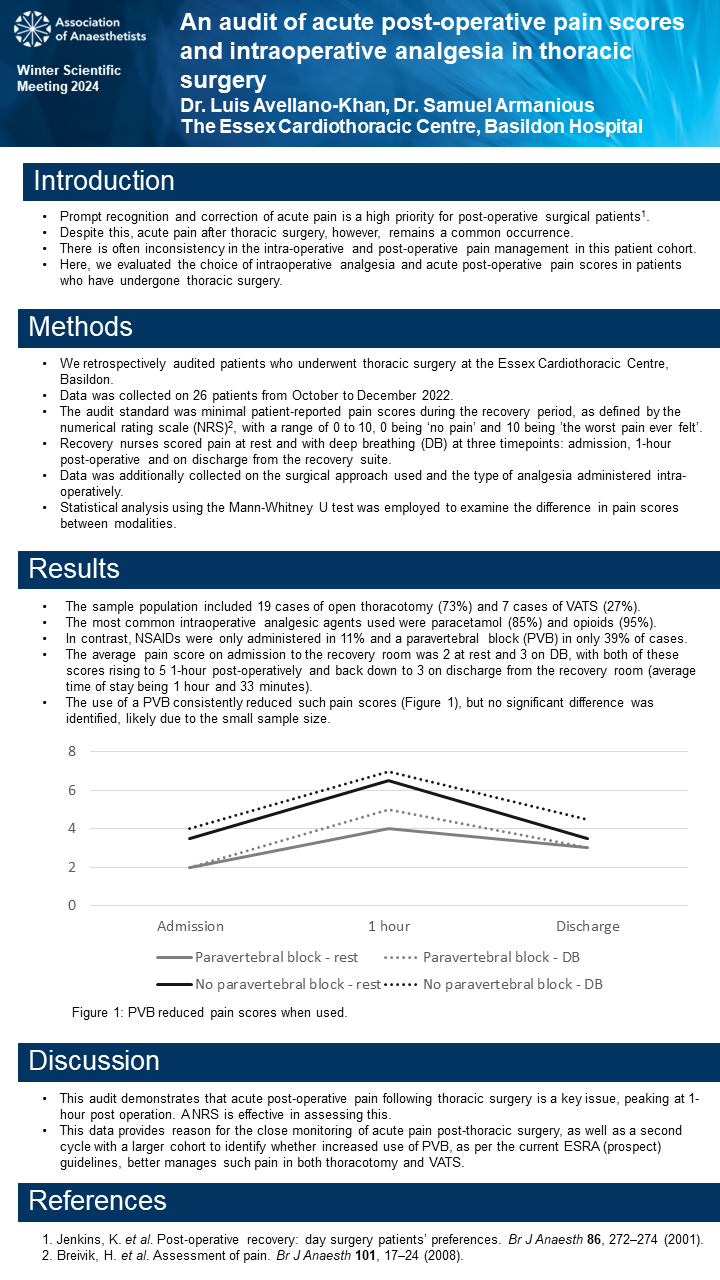
The sample population included 19 cases of open thoracotomy (73%) and 7 cases of VATS (27%). The most common intraoperative analgesic agents used were paracetamol (85%) and opioids (95%). In contrast, NSAIDs were only administered in 11% and a paravertebral block (PVB) in only 39% of cases. The average pain score on admission to the recovery room was 2 at rest and 3 on DB, with both of these scores rising to 5 1-hour post-operatively and back down to 3 on discharge from the recovery room (average time of stay being 1 hour and 33 minutes). The use of a PVB consistently reduced such pain scores (Figure 1), but no significant difference was identified, likely due to the small sample size.
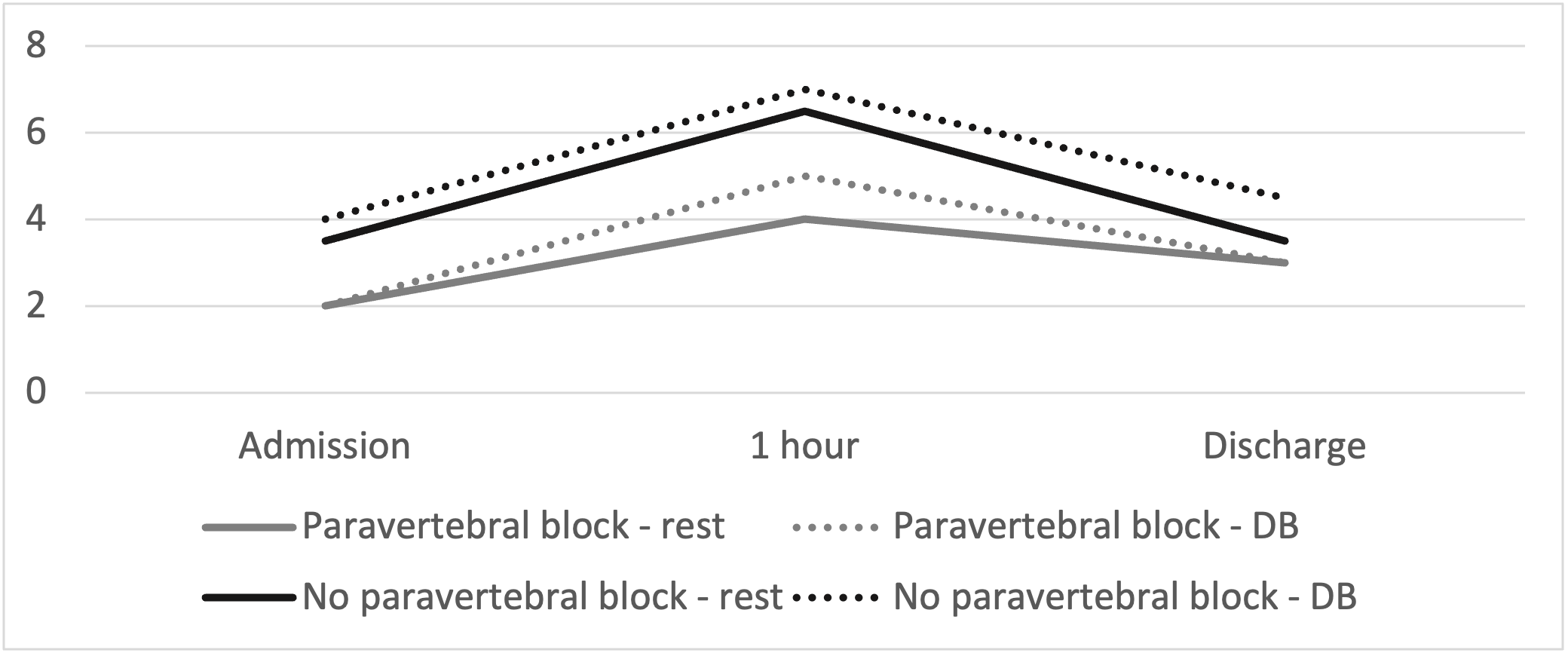
Figure 1. PVB reduced pain scores when used.
Discussion
This audit demonstrates that acute postoperative pain following thoracic surgery is a key issue, peaking at 1-hour post operation. A NRS is effective in assessing this. This data provides reason for the close monitoring of acute pain post-thoracic surgery, as well as a second cycle with a larger cohort to identify whether increased use of PVB, as per the current ESRA (prospect) guidelines, better manages such pain.
Acknowledgements
Many thanks to the recovery nurses for their diligent work.