006
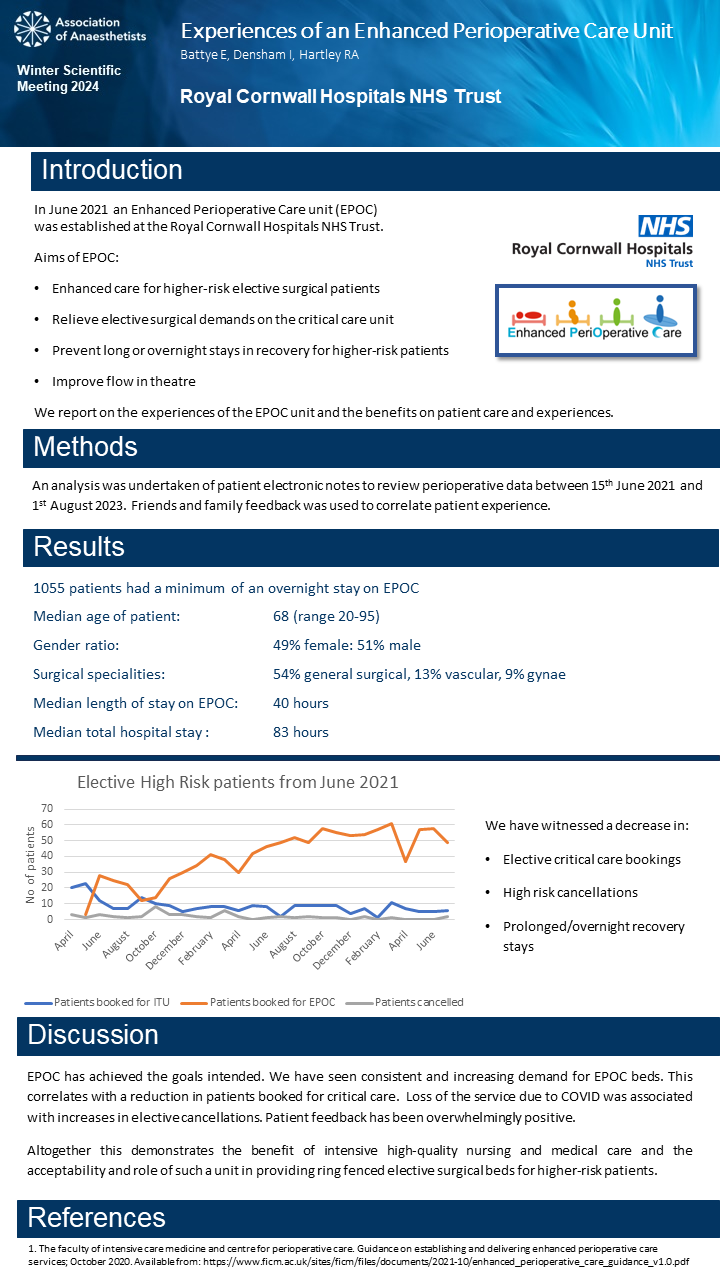
In June 2021 an Enhanced Perioperative Care unit (EPOC) was established at the Royal Cornwall NHS Trust consistent with the FICM and CPOC guidelines [1]. This is staffed by a daytime a clinical fellow with anaesthetic or intensive care consultant supervision. It is designed to accommodate a 24-48 hour patient stay and increased from 4 beds to 7 beds in December 2022. The aims of EPOC are to provide enhanced care for higher-risk elective surgical patients; relieve elective surgical demands on the critical care unit (liberating these beds for emergency patients); prevent long or overnight stays in recovery for higher-risk patients and to improve flow in theatre. Here, we report on the experiences of the EPOC unit and the benefits on patient care and experiences.
Methods
An analysis was undertaken of patient electronic notes to review perioperative data between 15th June 2021 and 1st August 2023. Friends and family feedback was used to correlate patient experience.
Results
A total of 1055 patients had a minimum of an overnight stay on EPOC. The median age of patients was 68 years (range 20-95) with a gender ratio of 49 % female: 51% male. With respect to surgical specialties, 54% were general surgical patients (both colorectal and upper gastrointestinal), 9% gynaecology and 13% vascular. Overall, the median EPOC unit stay was 40 hours, with a median total hospital stay of 83 hours. Since EPOC opened we have witnessed a decrease in the number of elective surgical patients booked for critical care; decrease in cancellation of elective high-risk operations and a further decrease in prolonged or overnight recovery stays for our elective patients.
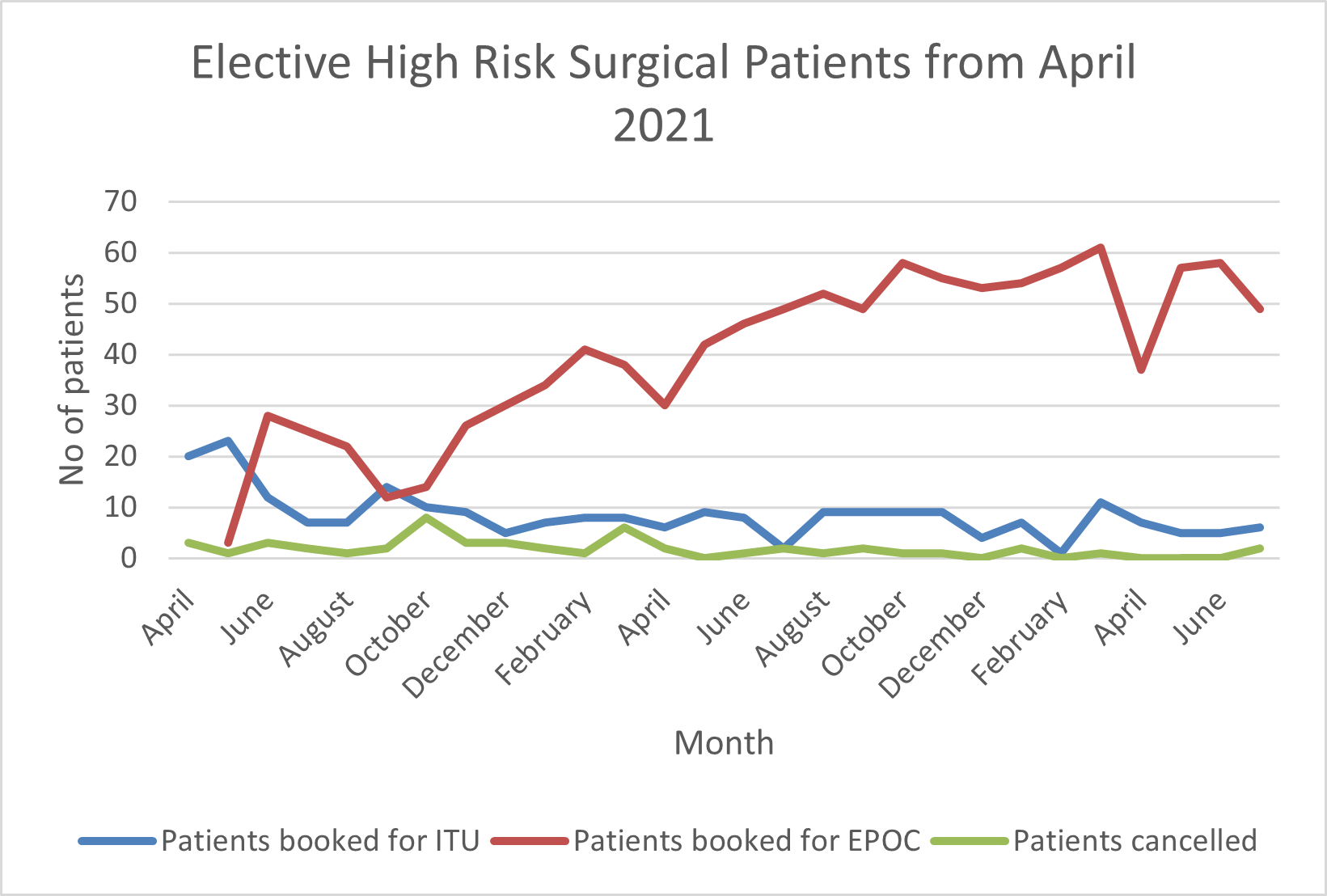
Figure 1. No. of patients booked for ITU versus EPOC over time (April 2021 to June 2023) alongside no. of high-risk elective operation cancellations.
Discussion
Overall, EPOC has achieved the goals intended. We have seen consistent and increasing demand for EPOC beds. This correlates with a reduction in patients booked for critical care. Following expansion, we have seen the ability to care for patients for longer and an increase in median length of EPOC stay. Loss of the service due to COVID was associated with increases in elective cancellations. Patient feedback has been overwhelmingly positive. Altogether this demonstrates the benefit of intensive high-quality nursing and medical care and the acceptability and role of such a unit in providing ring fenced elective surgical beds for higher-risk patients.