

Poster no: 007
Impact of postoperative destination on elective high risk major colorectal surgical patients
Poster no: 007
007
An Enhanced Postoperative Care Unit (EPOC) was opened at Royal Cornwall NHS Trust for high-risk elective surgical patients. Since opening in June 2021, 1070 patients have been admitted. Out of these patients, 48% underwent colorectal surgery and the most common procedures were right hemicolectomy (RHC) or anterior resection (AR). The aim of the study was to analyse the effectiveness of EPOC on patient outcomes including emergency hospital re-admissions.
Methods
Using our perioperative cube (data collection software bespoke to the trust) and validation with patient electronic records, we analysed the perioperative pathways and outcomes for elective RHC and AR. Consistent EPOC service provision occurred from January 2022 onwards therefore data from 1st January 2022 until 31st March 2023 has been utilised.
Findings
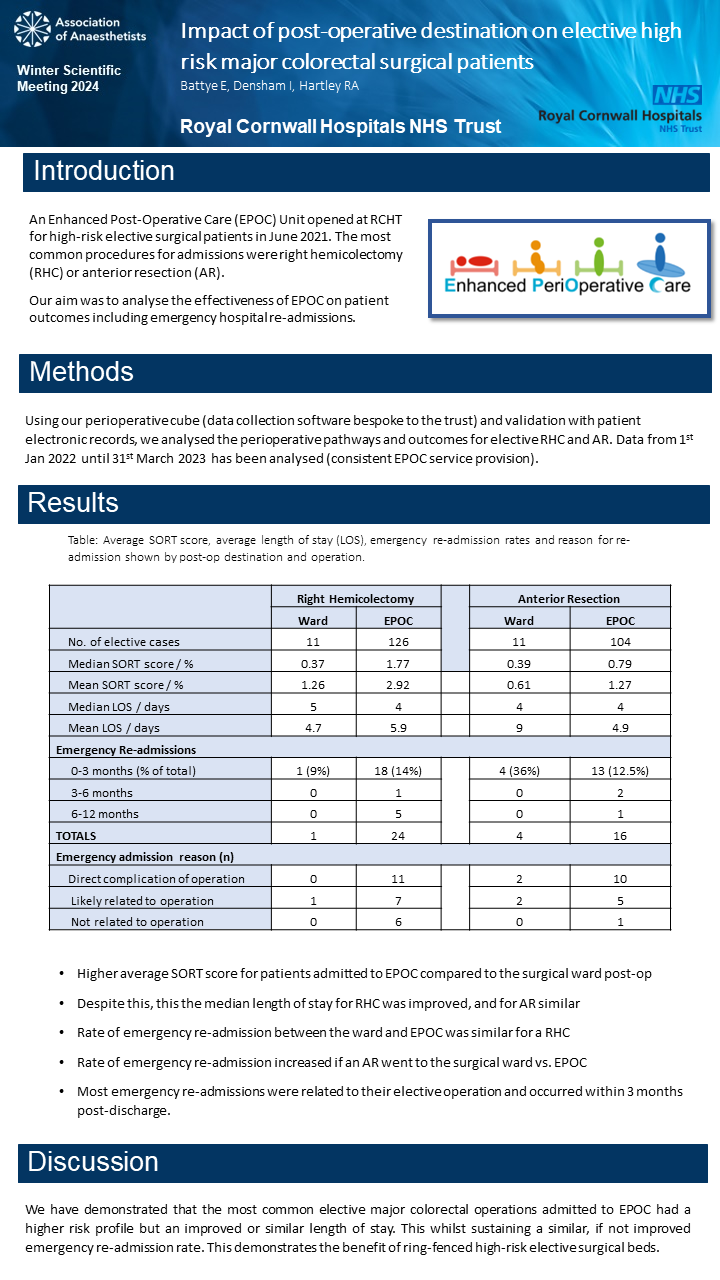
Right hemicolectomy Anterior resection Ward EPOC Ward EPOC No. of elective cases 11 126 11 104 Median SORT score / % 0.37 1.77 0.39 0.79 Mean SORT score / % 1.26 2.92 0.61 1.27 Median LOS / days 5 4 4 4 Mean LOS / days 4.7 5.9 9 4.9 Emergency re-admissions 0-3 months (% of total) 1 (9%) 18 (14%) 4 (36%) 13 (12.5%) 3-6 months 0 1 0 2 6-12 months 0 5 0 1 TOTAL 1 24 4 16 Emergency admission reason (n) Direct complication of operation 0 11 2 10 Likely related to operation 1 7 2 5 Not related to operation 0 6 0 1
Table 1. Average SORT score, average length of stay (LOS), emergency re-admission rates and reason for re-admission shown by post-op destination and operation.
Findings demonstrate a higher median and mean preoperative SORT 30-day mortality score for patients admitted to EPOC compared to the surgical ward post-op. Despite this, this the median length of stay for RHC was improved and for AR similar by going to EPOC postop. The rate of emergency readmission between the ward and EPOC was similar for a RHC and increased if an AR went to the surgical ward. Most emergency re-admissions were related to their elective operation and occurred within 3 months post-discharge.
Discussion
This study has demonstrated that the most common elective major colorectal operations admitted to EPOC had a higher risk profile but an improved or similar length of stay. This whilst sustaining a similar, if not improved emergency re-admission rate. This demonstrates the benefit of ring-fenced high-risk elective surgical beds. Further work is being undertaken to elucidate the relationship between risk and outcome. We are also further analysing emergency admissions to critical care post elective surgery.