008
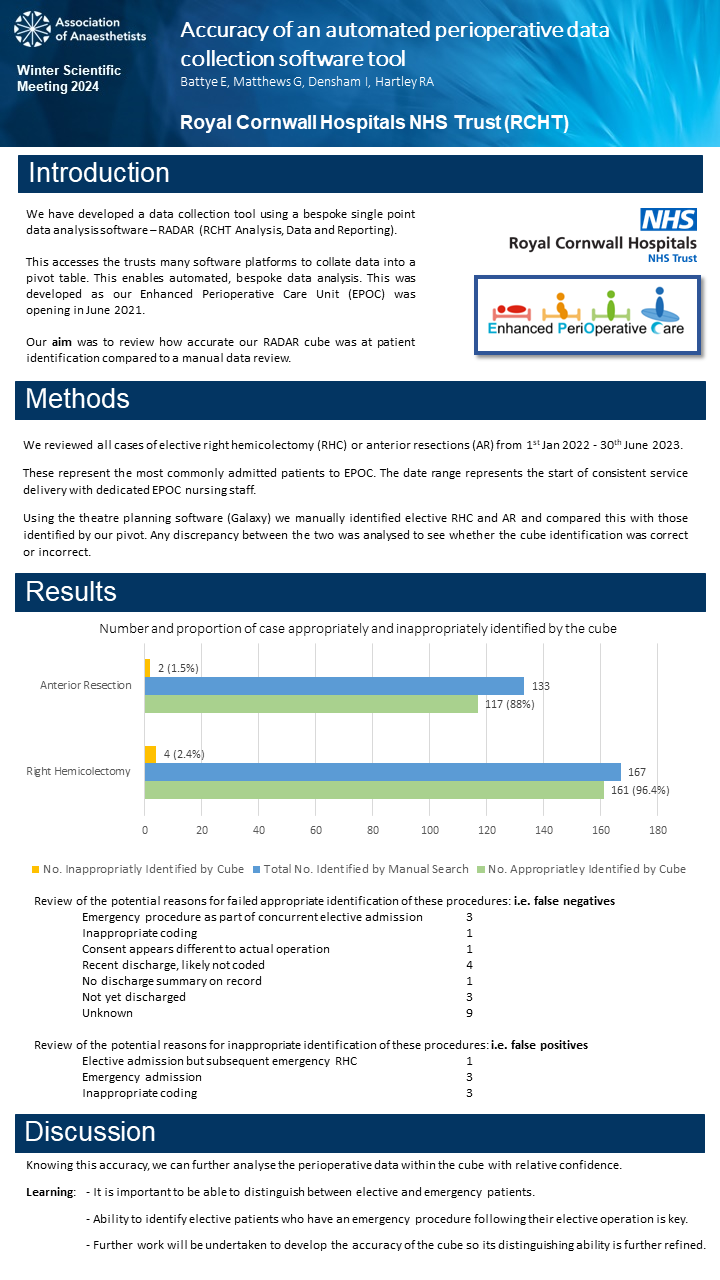
Patient outcomes inform pathways; this is a key theme of the Centre for Perioperative Care. We have developed a data collection tool using a bespoke single point data analysis software – RADAR (RCHT Analysis, Data and Reporting). This accesses several software platforms to collate data into a cube (Excel pivot table) and enables automated, bespoke data analysis. The perioperative cube identifies patients using OPCS classification of intervention and procedure codes. It was developed as our Enhanced Perioperative Care Unit (EPOC) was opening. Our aim was to review how accurate our RADAR cube was at patient identification compared to a manual data review.
Methods
We reviewed elective right hemicolectomy (RHC) or anterior resections (AR) between 1st Jan 2022 and 30th June 2023. These represent the most commonly admitted patients to EPOC and the date range represents the start of consistent service delivery. Using the theatre planning software (Galaxy) we manually identified elective RHC and AR. We compared this with those identified by our cube. Any discrepancy between the two was analysed to see whether the cube identification was correct or incorrect.
Results
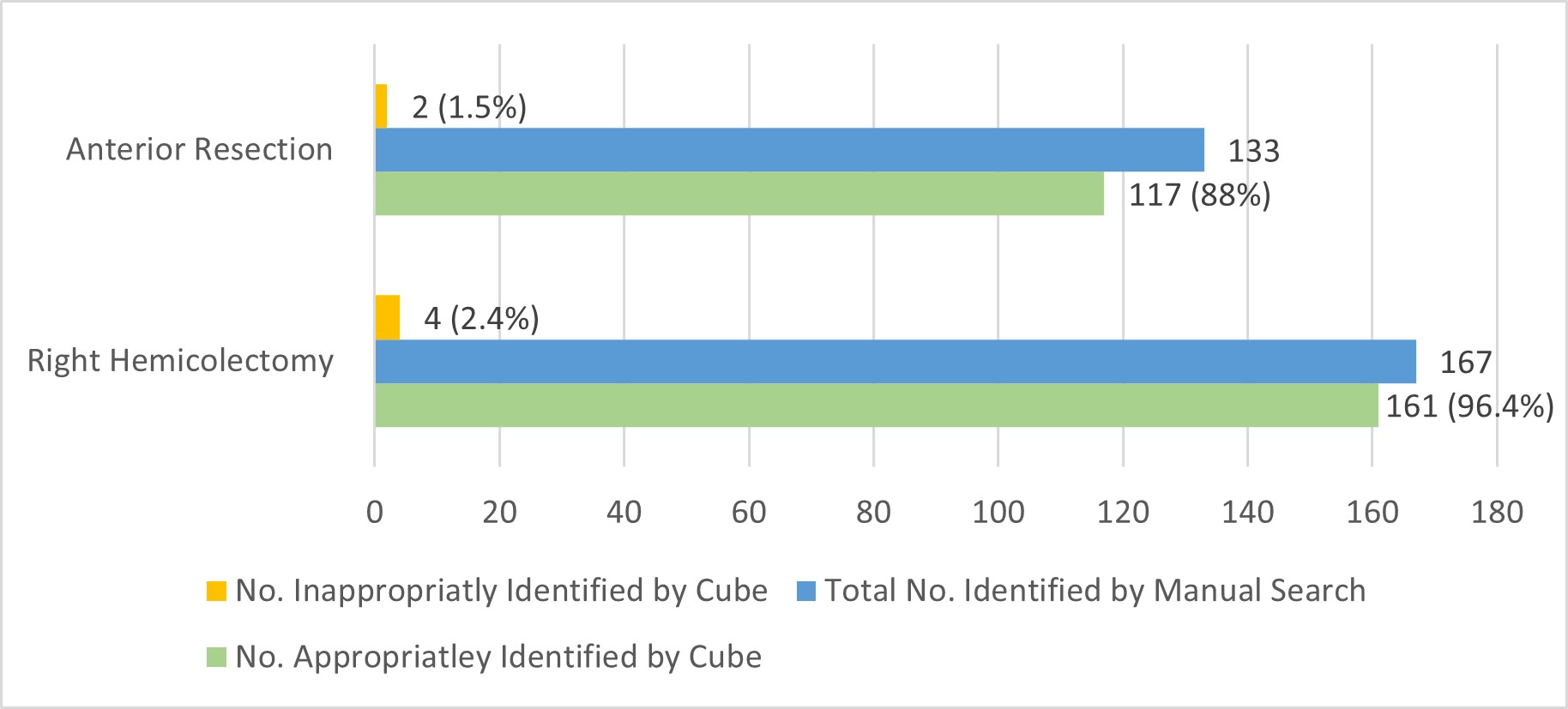
Review of the potential reasons for failed appropriate identification of these procedures revealed: Emergency procedure as part of concurrent elective admission (3); possible inappropriate coding (1); consent appears different to actual operation (1); recent discharge, likely not coded (4); no discharge summary on record (1); not yet discharged (3); unknown (9). Review of the potential reasons for inappropriate identification of these procedures revealed: Elective admission but subsequent emergency RHC (1); emergency admission (3); inappropriate coding (3).
Discussion
Initial appraisal of our perioperative cube suggests a good level of accuracy to inform patient pathways and service planning. Knowing this accuracy, we can further analyse the perioperative data within the cube with relative confidence. Learning points arise from the failure of the cube. It is important to be able to distinguish between elective and emergency patients as they will have different perioperative characteristics. A further key ability would be to identify elective patients who have an emergency procedure following their elective operation. Further work will be undertaken with our information services team to develop the accuracy of the cube but also ensure its distinguishing ability is further refined.