

Poster no: 058
Poster no: 058
058
Diabetes is associated with an increased likelihood of difficult intubation due to reduced atlanto-occipital mobility secondary to glycosylation of collagen in the cervical joints [1,2]. We prospectively analysed intubation in diabetic vs non-diabetic patients.
Methods
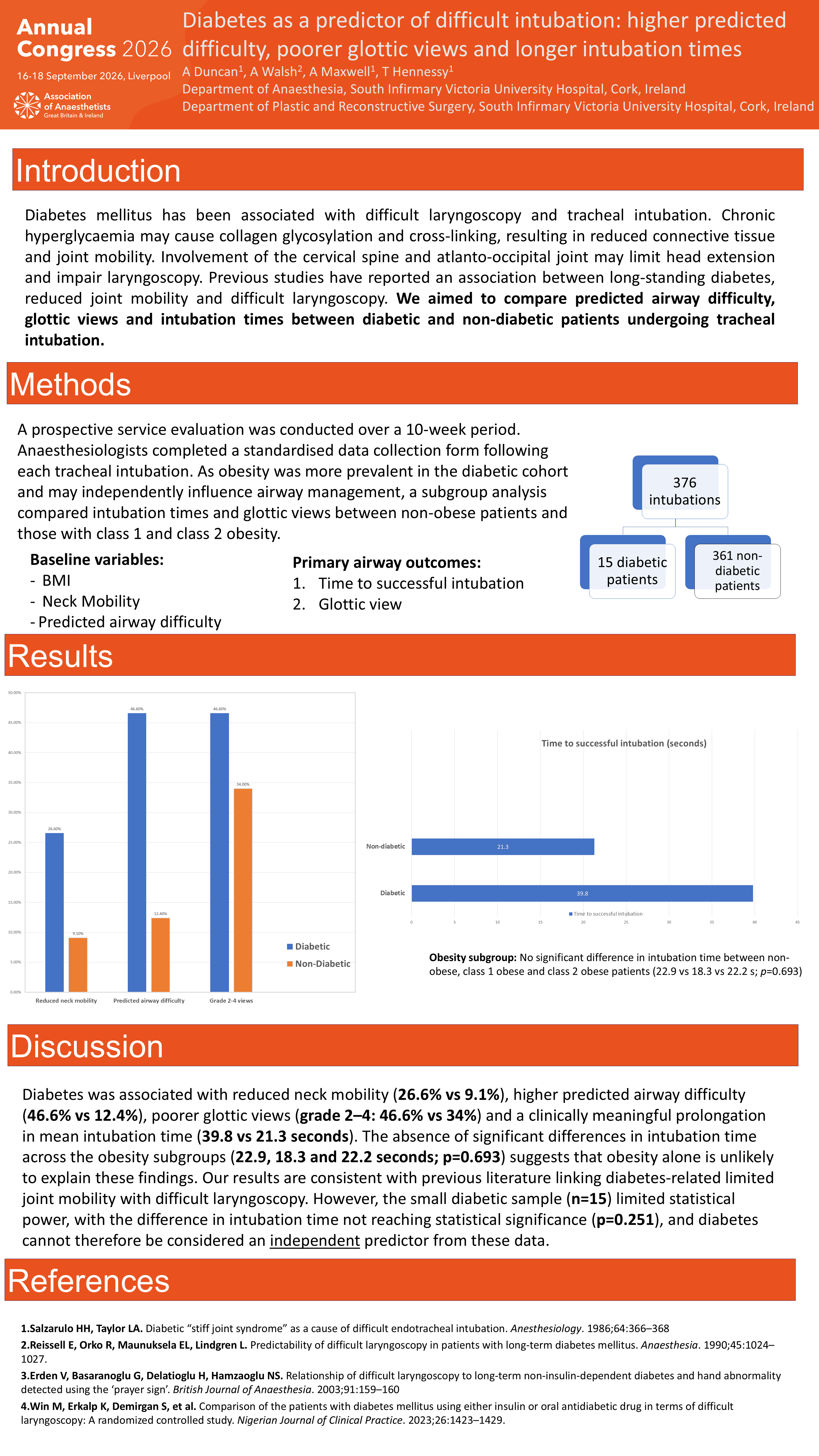
A service evaluation capturing intubations was conducted over a 10-week period, with anaesthesiologists completing a data collection form after each intubation. Baseline measures included BMI, neck mobility and predicted difficulty, while assessed outcomes included time to successful intubation from laryngoscope insertion and glottic view. In total, 376 intubations were documented, of which 15 were performed in patients diabetes and 361 in non-diabetic patients.
Results
Of the 15 diabetic patients, 26.6% (n=4) were recorded to have reduced neck mobility compared to 9.1% (n=33) of the non-diabetic cohort. They also had a higher rate of predicted difficulty of 46.6% (n=7) compared to 12.4% (n=45). The time to intubate was longer by 18.5 seconds (39.8 seconds to 21.3 seconds, p = 0.2509) with poorer glottic views obtained in the diabetic population (46.6% vs 34% with grade 2-4 view). Although class 1 and 2 obesity was more common in the diabetic cohort (33% vs 26%), a subgroup analysis comparing intubation times and glottic views between class 1 and 2 obese (BMI 30–39.9 kg/m²) and non-obese patients showed no significant differences. Mean intubation times were 22.9 s in non-obese patients, 18.3 s in class 1 obesity, and 22.2 s in class 2 obesity (p = 0.6927). Proportion of grade 1 glottic views between non-obese, class 1 and class 2 obese were 65.6%, 70% and 62% respectively. These results strengthen the likelihood that the observed differences are attributable to diabetes.
Discussion
Diabetes was associated with markers of more difficult airway management, including reduced neck mobility and higher rates of predicted difficulty. Intubation times were longer and glottic views poorer in diabetic patients, supporting the concept of limited atlanto-occipital mobility from collagen glycosylation. Although obesity was more common in diabetics, subgroup analysis showed no significant effect of BMI on intubation time or view, suggesting diabetes itself may be a key contributor.
Acknowledgements:
The authors have no acknowledgments to declare.