

Poster no: 140
Poster no: 140
140
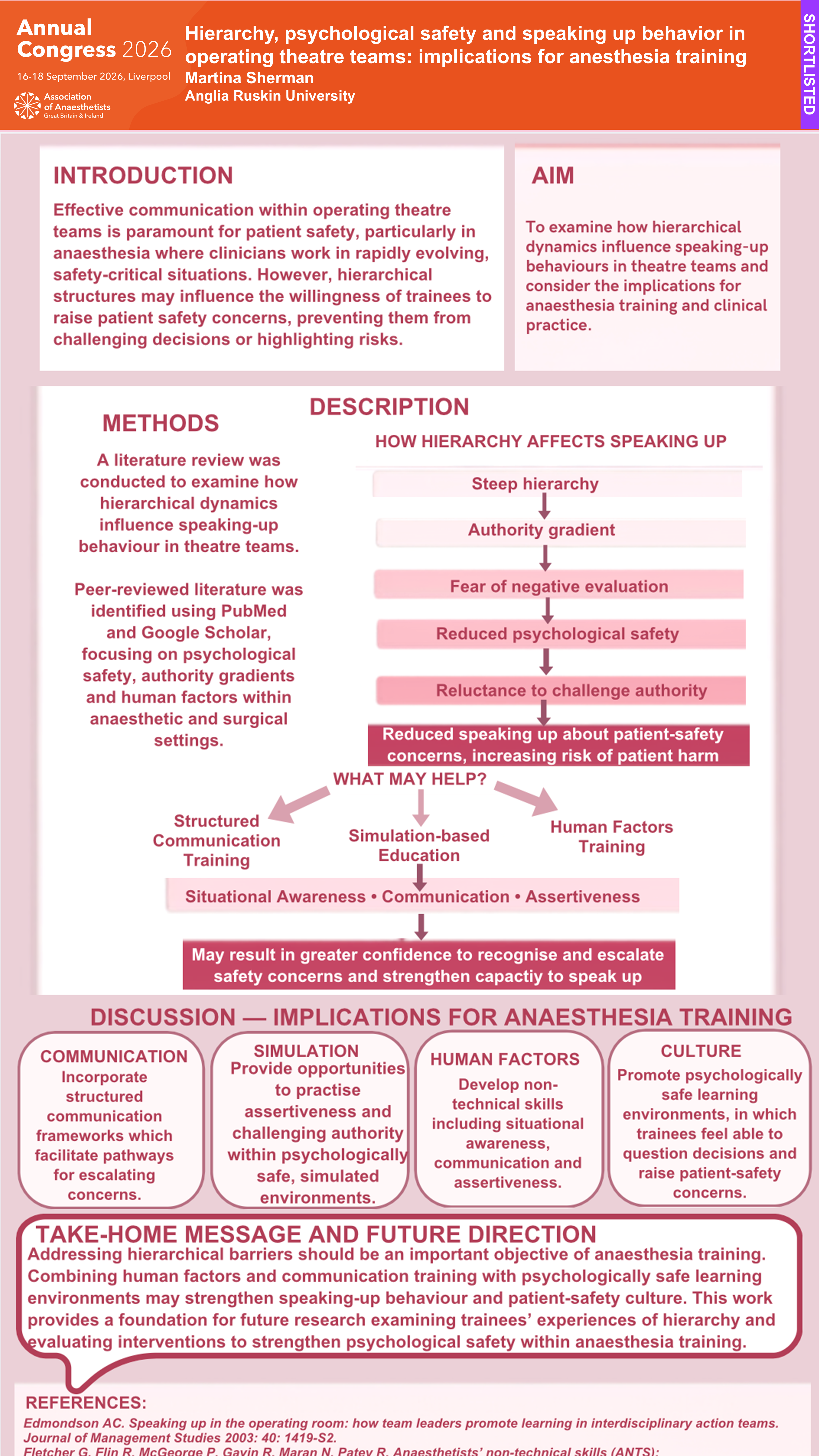
Effective communication within operating theatre teams is essential for maintaining patient safety, particularly in anaesthetic practice where clinicians often act as patient safety advocates. However, hierarchical structures within clinical environments may influence trainees’ willingness to raise patient safety concerns, preventing them from challenging decisions or highlighting risks.
Methods
A literature review was conducted to examine how hierarchical dynamics influence speaking-up behaviours in theatre teams and to consider the implications for anaesthesia training and clinical practice. Peer-reviewed articles were identified through database searches, including PubMed and Google Scholar. Studies exploring psychological safety, authority gradients and human factors within surgical or anaesthetic settings were reviewed.
Results
The literature suggests that steep hierarchical structures discourage trainees and junior clinicians from raising patient safety concerns. Common barriers include fear of negative evaluation, authority gradients and reduced psychological safety [1]. Several studies demonstrate that structured communication training, simulation-based education and human factors training can improve trainee confidence and willingness to challenge authority. These findings highlight the importance of non-technical skills such as situational awareness, communication and assertiveness in enabling clinicians to recognise and escalate patient safety concerns despite existing hierarchical power gradients [2].
Discussion
Addressing hierarchical barriers within clinical teams, and empowering those lower within the authority gradient, should be considered an important objective of anaesthesia training and theatre team culture. Incorporating human factors training, communication frameworks and simulation into training programmes may help trainees develop confidence in raising concerns. Promoting psychologically safe learning environments may support trainee development while fostering safer communication practices. Integrating human factors and communication training into anaesthesia training curricula may represent an important strategy for addressing these challenges and strengthening patient safety culture in operating theatre teams.