

Poster no: 053
Poster no: 053
053
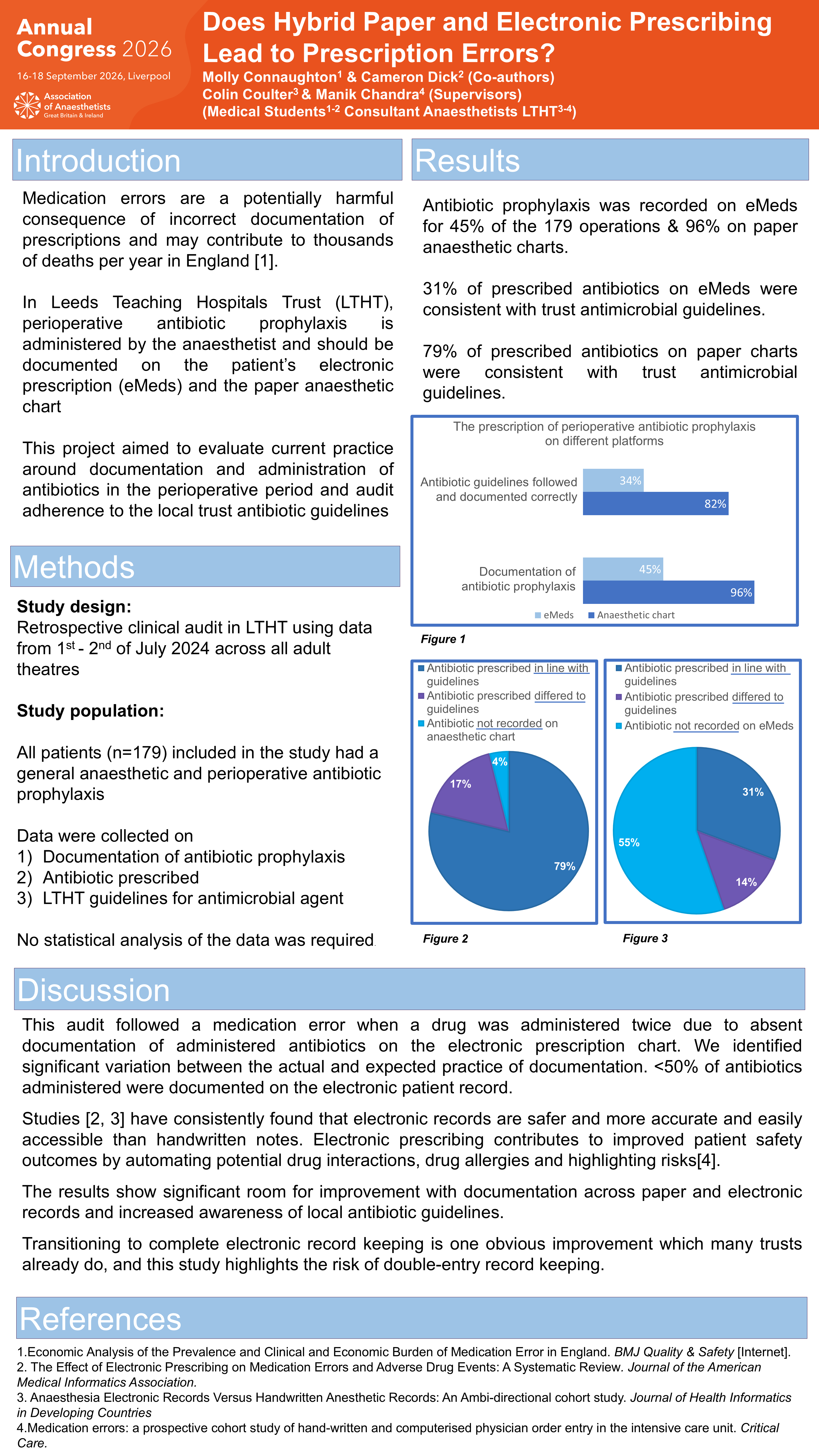
Medication errors are a potentially harmful consequence of incorrect documentation of prescriptions. In Leeds Teaching Hospitals Trust, perioperative antibiotic prophylaxis is delivered by the anaesthetists, and this should be documented subsequently on the electronic prescribing system (eMeds) and the paper anaesthetic chart. Antibiotic prophylaxis regimens should be specific to the operation and the hospital trust in order to reduce the incidence of surgical site infections (SSIs). The aims of this project were to record the current practice around this documentation, and ensure that antibiotic prophylaxis is being delivered in accordance with the local trust guidelines.
Methods
Retrospective data were used from theatre lists on the First and Second of July 2024, across all of the theatres in LTHT. This provided 379 patient records, of which 179 were applicable to the study. Data were collected on: the method of documentation of antibiotic prophylaxis, the antibiotic prescribed, and the antimicrobial recommended in the LTHT guidelines. Additionally, data were collected on the duration, speciality and location of each operation.
Results
The antibiotic prophylaxis was only recorded on eMeds for 45% of the 179 operations where it was indicated, whereas it was documented on the anaesthetic charts for 96% of these operations. For 31% of the records where antibiotics were prescribed on eMeds, this was the correct antimicrobial according to the guidelines. Where antibiotics were prescribed on the anaesthetic chart, this was in line with LTHT guidelines for 79% of records.
Discussion
The results show a clear discrepancy between current and desired practice for the prescribing of perioperative antibiotics, both in regard to documentation and local antibiotic stewardship. This has led to medication errors and has the potential to cause serious patient harm. The hybrid system in Leeds has allowed for differences in antibiotic prescriptions between the two documentation systems. Electronic anaesthetic records have been found to be more accurate and accessible than handwritten anaesthetic records [1], and furthermore it may be most cost effective. The findings of this audit show that paper charts are still used more consistantly than electronic charts. This indicates that official guidelines and protocols should be put in place to improve and standardise peri-operative documentation, prescribing and ultimately patient safety outcomes.