

Poster no: 136
Poster no: 136
136
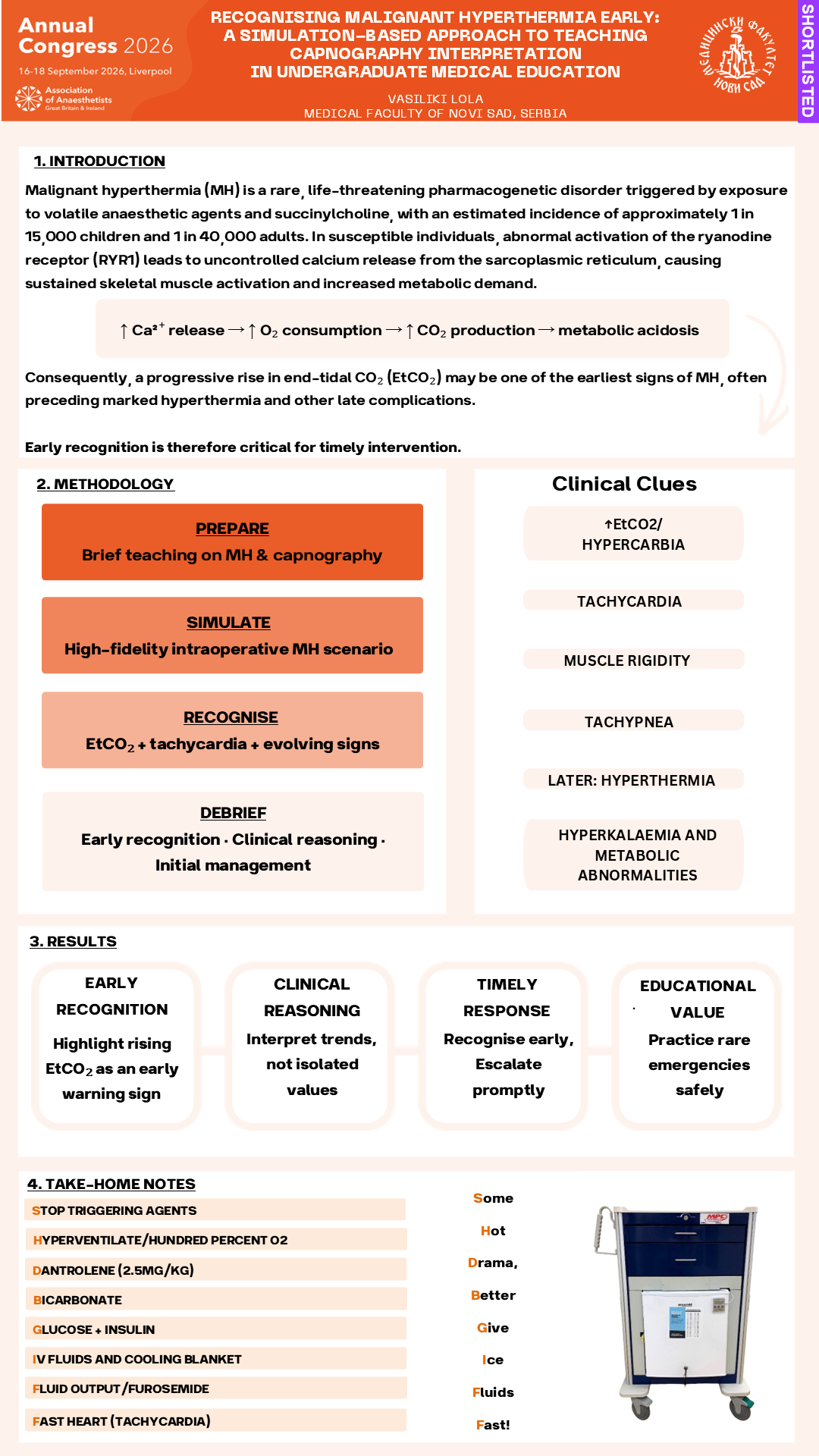
Malignant hyperthermia is a rare but life-threatening pharmacogenetic disorder triggered by certain anaesthetic agents. Early recognition is critical to prevent rapid metabolic deterioration, with an unexpected rise in end-tidal carbon dioxide (EtCO₂) often representing one of the earliest diagnostic indicators. Undergraduate medical students have limited exposure to intraoperative monitoring and anaesthetic emergencies, creating an educational gap in early recognition of peri-operative physiological deterioration. Simulation-based education may support the development of structured clinical reasoning, situational awareness and interpretation of real-time physiological trends.
Methods
A high-fidelity simulation-based teaching session was developed for undergraduate medical students using an intraoperative malignant hyperthermia scenario. Prior to the simulation, students received a brief teaching session on intraoperative monitoring and capnography interpretation. During the scenario, learners observed a progressive rise in EtCO₂ accompanied by tachycardia and additional clinical features consistent with malignant hyperthermia. The educational focus was placed on recognising trends in capnography as an early diagnostic trigger, promoting timely escalation and avoiding fixation on late-stage crisis features. Structured debriefing was used to reinforce interpretation of physiological trends, early warning signs and initial management principles.
Results
Students actively engaged with interpretation of capnography trends and identified rising EtCO₂ as a potential early indicator of malignant hyperthermia. Structured debriefing facilitated discussion of differential diagnosis and appropriate initial management steps. Participants reported increased confidence in interpreting intraoperative monitoring data, recognising early physiological deterioration and initiating timely escalation.
Discussion
Simulation-based education is an effective method for introducing rare but critical anaesthetic emergencies at undergraduate level. Emphasising early recognition of physiological trends, particularly changes in end-tidal CO₂, may enhance situational awareness and support structured clinical reasoning in peri-operative care. This approach may improve preparedness for anaesthetic crises and strengthen patient safety by targeting both technical and non-technical skills in undergraduate medical education.