

Poster no: 120
Poster no: 120
120
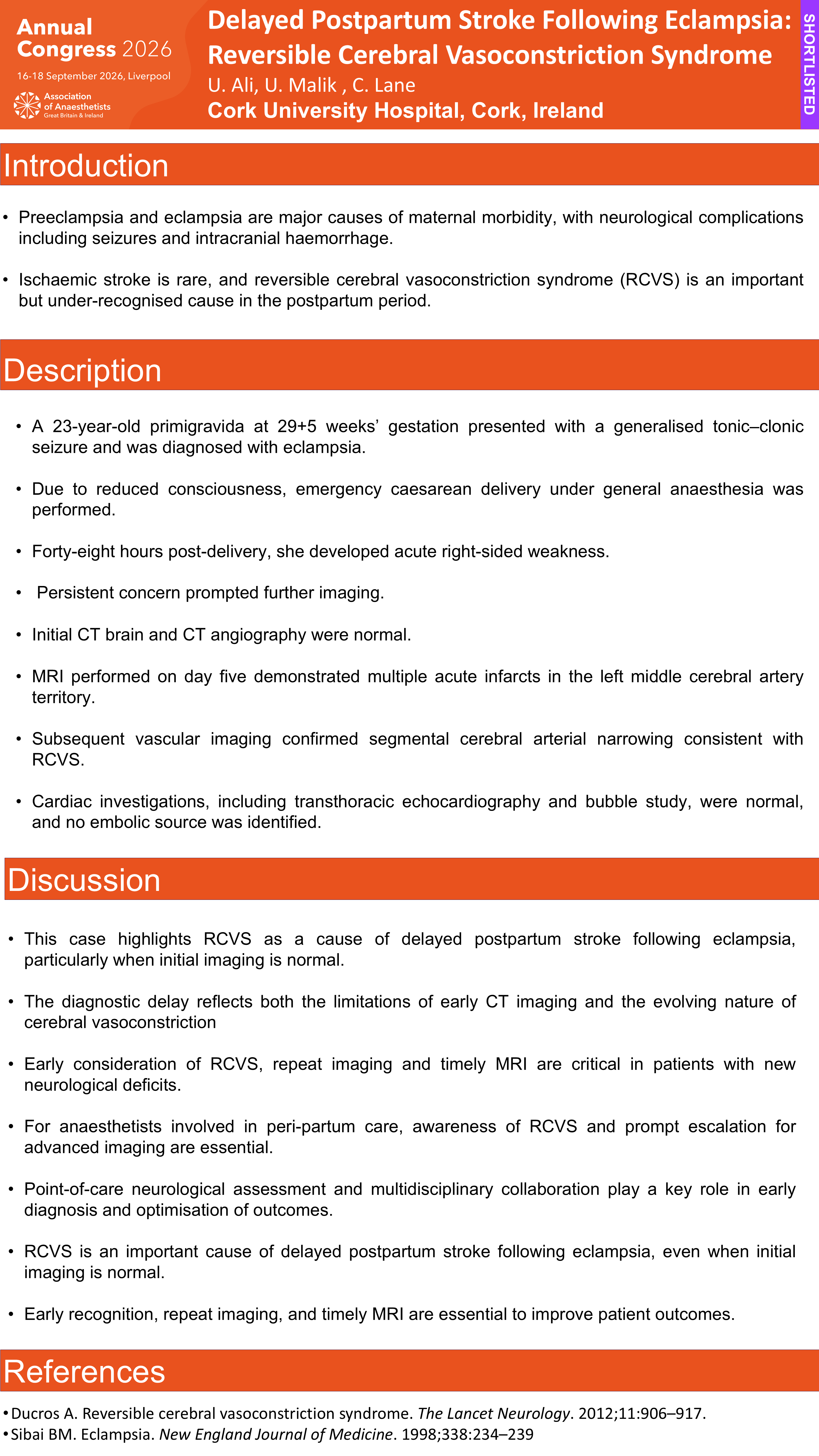
Preeclampsia and eclampsia are major causes of maternal morbidity, with neurological complications including seizures and intracranial haemorrhage. Ischaemic stroke is rare, and reversible cerebral vasoconstriction syndrome (RCVS) is an important but under-recognised cause in the postpartum period, often with initially normal imaging.
Description
A 23-year-old primigravida presented at 29+5 weeks’ gestation with a generalised tonic–clonic seizure and was diagnosed with eclampsia. Due to reduced consciousness, emergency caesarean delivery under general anaesthesia was performed. Forty-eight hours post-delivery, she developed acute right-sided weakness. Initial CT brain and CT angiography were normal. Despite transient clinical improvement, persistent concern prompted further imaging. MRI performed on day five demonstrated multiple acute infarcts in the left middle cerebral artery territory. Subsequent vascular imaging confirmed segmental cerebral arterial narrowing consistent with RCVS. Cardiac investigations, including transthoracic echocardiography and bubble study, were normal, and no embolic source was identified. She was managed with supportive therapy and blood pressure control.
Discussion
This case highlights RCVS as a cause of delayed postpartum stroke following eclampsia, particularly when initial imaging is normal. Early CT imaging may be falsely reassuring, while vasoconstriction evolves over time. RCVS should be considered in postpartum neurological deficits despite normal early imaging. A high index of suspicion, repeat imaging and timely MRI are essential in patients with new neurological deficits, as diagnostic delay may lead to preventable morbidity. For anaesthetists involved in peripartum care, awareness of RCVS and prompt escalation for advanced imaging are critical to optimise outcomes.
Acknowledgements
None.