
Poster no: 078
Poster no: 078
078
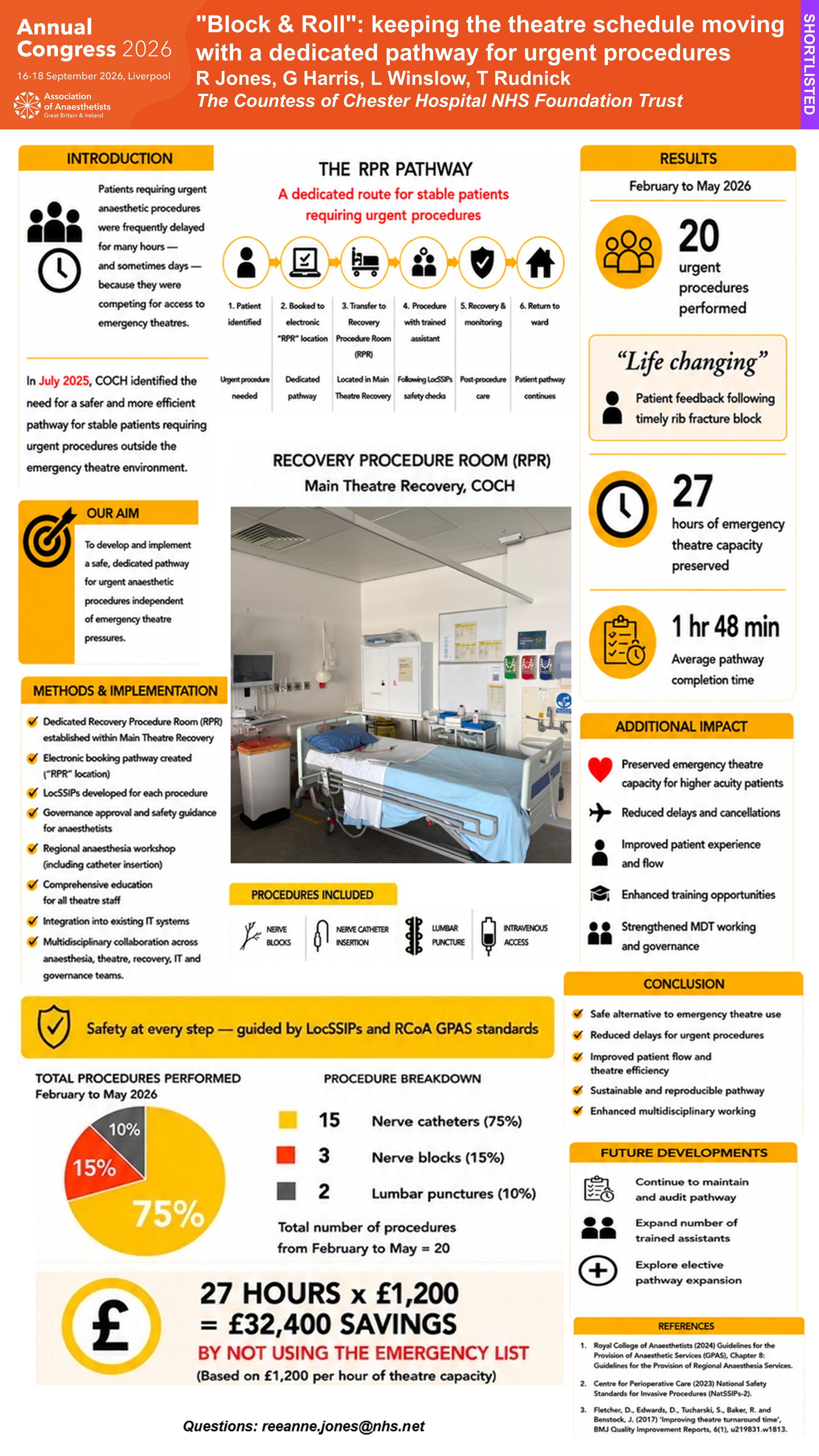
Under current NHS pressures, patients frequently wait many hours to days for essential urgent procedures scheduled via the emergency theatre list, only to often be deprioritised due to competing clinical demands. We developed a dedicated pathway at the Countess of Chester Hospital (COCH) for stable patients requiring such procedures, including nerve blocks/catheters, lumbar punctures, and intravenous access, supported by clear safety guidance.
Methods
We have designed and implemented a streamlined pathway enabling these procedures to be performed in a designated area within Main Theatre Recovery, termed the ‘Recovery Procedure Room (RPR).’ Local Safety Standards for Invasive Procedures (LocSSIPs) were developed for each procedure, ensuring compliance with mandated safety requirements while remaining independent of the traditional theatre framework [1]. Significant multidisciplinary work was undertaken, including process optimising, refinement of patient selection criteria, IT system integration, clinical governance approval, and collaboration with the theatre team. A regional anaesthesia workshop was provided, as well as a comprehensive education programme for all theatre staff.
Results
We implemented a sustained clinical and cultural change in practice, enabling urgent anaesthetic procedures for stable patients to be performed safely in the ‘RPR’, thereby preserving emergency theatre capacity for higher acuity cases. The estimated cost of occupying a full theatre for such procedures is at least £1,200 per hour [2], representing a significant cost saving through this pathway. From January 2026 to April 2026, we have reduced the average wait time for urgent procedures and patients reported highly positive experiences, with timely analgesia for rib fractures described as "life changing." Residents also benefited from increased procedural exposure and independent experience. Since April 2026, the pathway and LocSSIPs have been fully integrated into routine clinical practice.
Discussion
We have successfully implemented a safe sustainable service improvement in the delivery of a wide range of urgent anaesthetic procedures for stable patients. This was achieved despite significant challenges relating to IT systems, governance, policy, and cultural change. The pathway has improved emergency theatre flow and efficiency, enhanced training opportunities for Resident doctors, reduced costs, and most importantly, improved patient experience.