

Poster no: 111
Poster no: 111
111
Ineffective handover is a significant contributor to postoperative complications and patient safety incidents. A structured handover to the recovery team is essential to ensure safe continuity of care. However, handovers are often brief, and important details may be omitted. This project evaluated the handover process following implementation of a new anaesthetic chart and compared performance with the previous cycle. Data collected was based on guidance from the Association of Anaesthetists and Anaesthesia Clinical Services Accreditation.
Methods
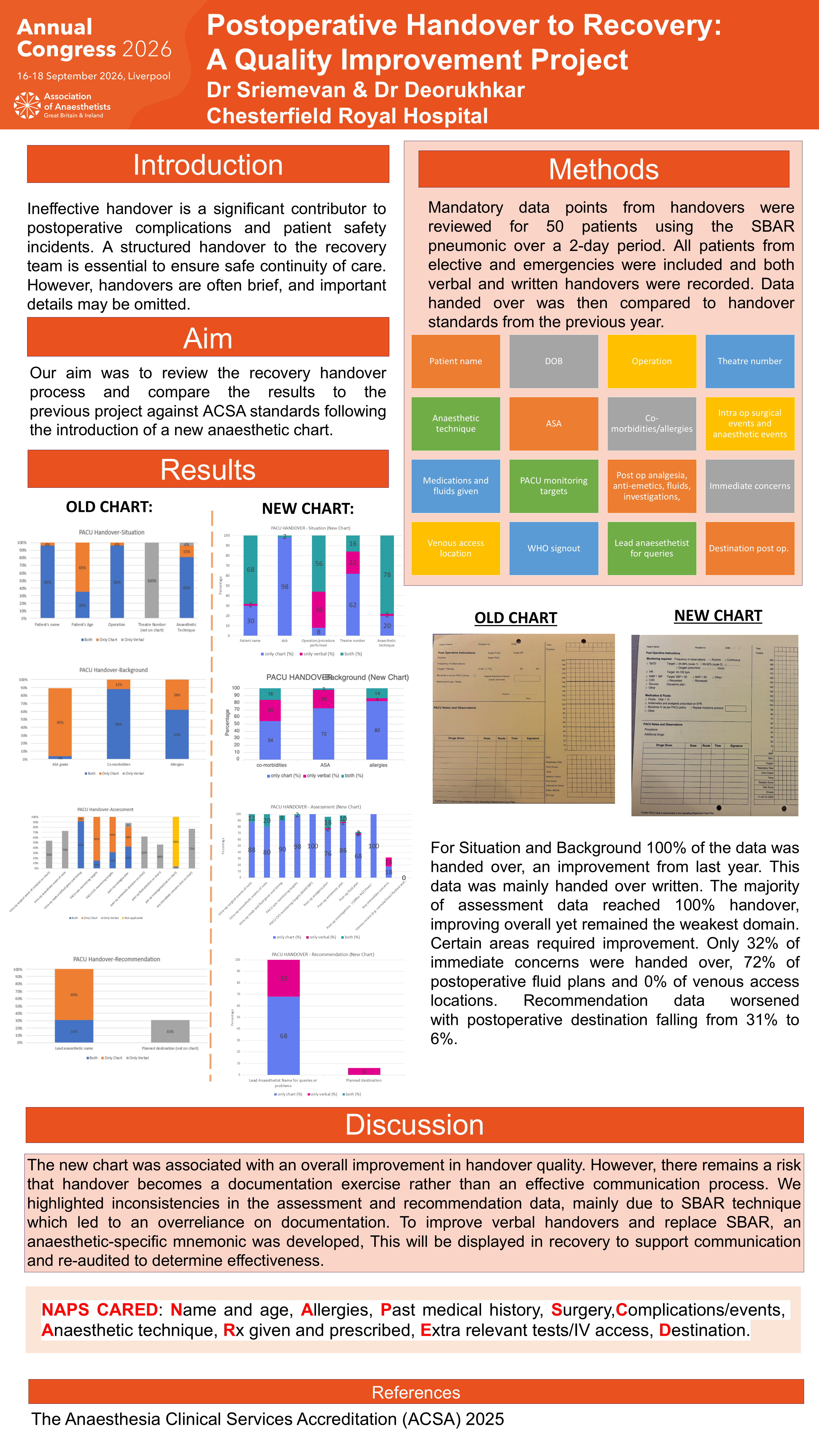
An expanded section for recording key handover information was added to the new charts. Fifty charts and handovers, over 2-days, were compared with the first audit cycle. For each data point, it was recorded whether the information was handed over verbally, written, or both. Data was grouped as Situation, Background, Assessment, and Recommendation (SBAR) for both elective and emergency cases. Mandatory data included: patient, anaesthetist, procedural and post-operative details.
Results
Situation data was handed over in 100% of cases, consistent with the first audit cycle. However, more anaesthetists used written documentation than previously. Background data improved significantly to 100% handover rate, also predominantly written. The majority of assessment data reach 100% handover, improving overall yet remained the weakest area. Only 32% of immediate concerns were handed over, 72% of postoperative fluid plans and 0% of venous access locations. Recommendation data worsened with postoperative destination falling from 31% to 6%.
Discussion
The new chart was associated with an improvement in handover quality. However, there remains a risk that handover becomes a documentation exercise rather than an effective communication process. We highlighted inconsistencies in the assessment and recommendation data, mainly due to SBAR technique which led to an overreliance on documentation. To improve verbal handovers and replace SBAR, an anaesthetic-specific mnemonic was developed, NAPS CARED: Name and age, Allergies, Past medical history, Surgery, Complications/events, Anaesthetic technique, Rx given and prescribed, Extra relevant tests/IV access, Destination. This will be displayed in recovery to support communication and re-auditted to determine effectiveness. By promoting a structured, specialty-specific approach to handovers, we aim to reduce communication risks and improve patient safety.
Acknowledgements
Dr Deorukhkar
Dr Hirst