

Poster no: 044
Poster no: 044
044
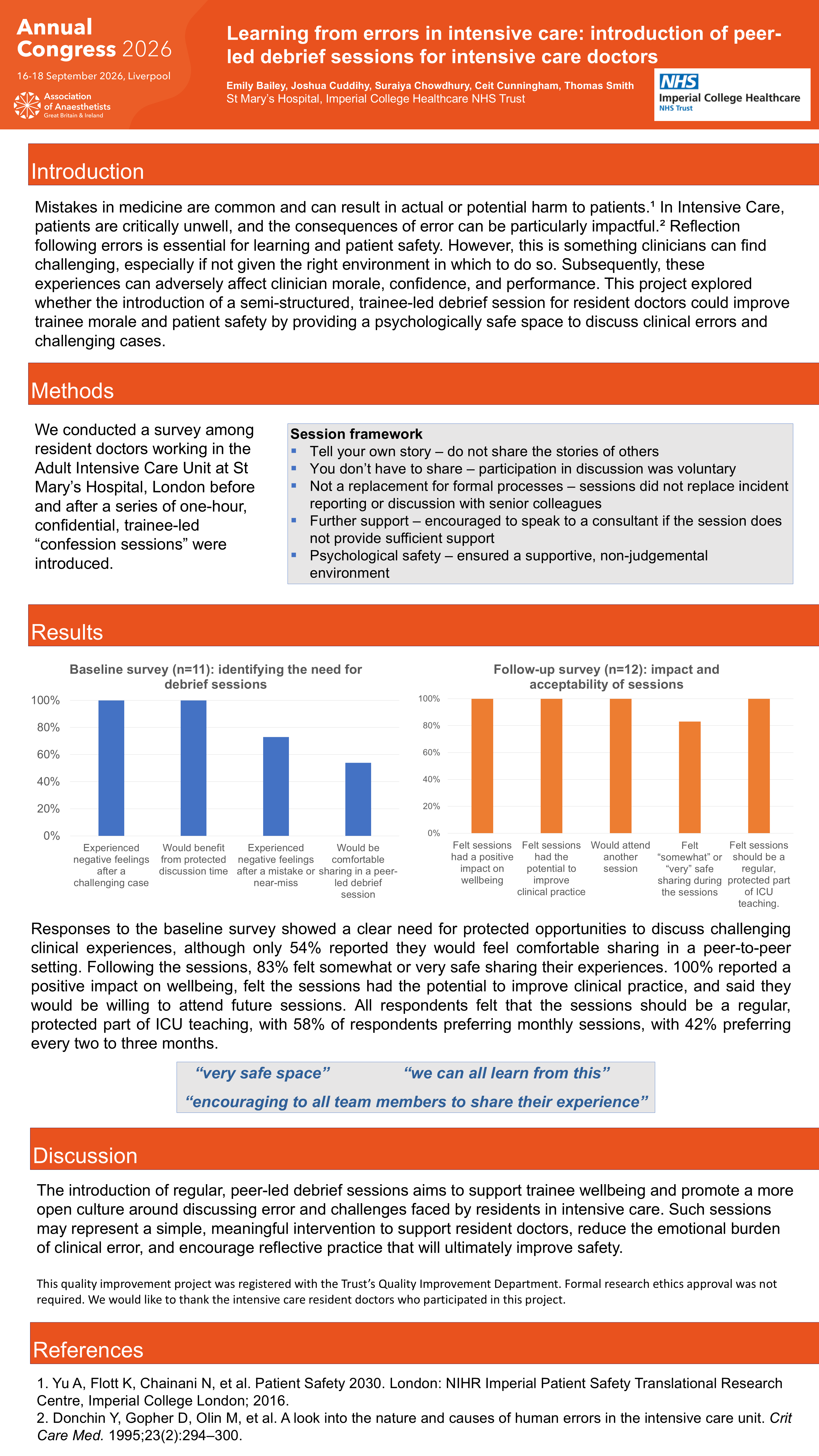
Mistakes in medicine are common and can result in actual or potential harm to patients [1]. In anaesthesia and intensive care, patients can be critically unwell, and the consequences of error can be particularly impactful [2]. Reflection following errors is essential for learning and patient safety. However, this is something clinicians can find challenging, especially if not given the right environment in which to do so. Subsequently, these experiences can adversely affect clinician morale, confidence, and performance. This project explored whether the introduction of semi-structured, trainee-led debrief sessions for resident doctors working in intensive care could improve trainee morale and patient safety by providing a psychologically safe space to discuss clinical errors and challenging cases.
Methods
We surveyed resident doctors working in the Adult Intensive Care Unit (AICU) at St Mary’s Hospital, London, before and after a series of one-hour, confidential, trainee-led "confession sessions" were introduced.
Results
In the initial survey (N=11), 91% of residents reported experiencing clinical situations they felt would benefit from further discussion. 73% reported experiencing negative feelings related to a mistake or near miss, while 100% reported experiencing negative feelings following a challenging case. 100% felt they would benefit from protected time to discuss mistakes or near misses; however, only 54% of respondents reported that they would feel comfortable in sharing their experiences in a peer-led debrief session. A follow-up survey (N=12), identified that 83% of residents felt somewhat or very safe in sharing their experiences during the sessions. Furthermore, 100% of respondents felt that the sessions had a positive impact on their wellbeing and had the potential to improve clinical practice, and 100% of residents said they would attend another session.
Discussion
The introduction of regular, peer-led debrief sessions aims to support trainee wellbeing and promote a more open culture around discussing errors and challenges faced by residents in intensive care and anaesthesia. Such sessions may represent a simple, meaningful intervention to support resident doctors, reduce the emotional burden of clinical error, and encourage reflective practice that will ultimately improve safety.