

Poster no: 130
Poster no: 130
130
Pre-eclampsia-associated cardiomyopathy is a recognised cause of acute heart failure and pulmonary oedema in obstetric patients, driven by increased afterload, endothelial dysfunction and fluid shifts [1]. Prior exposure to anthracyclines such as doxorubicin carries a dose-dependent lifelong risk of cardiomyopathy, which may remain subclinical until unmasked by physiological stressors including pregnancy [2]. The co-existence of these pathologies presents significant anaesthetic challenges, particularly in urgent delivery.
Description
A primigravida in her mid-20s at 34 weeks gestation presented to a district general hospital with pre-eclampsia. Her past medical history included childhood malignant peripheral nerve sheath tumour treated, in part, with doxorubicin at a cumulitive dose of 360mg/m2. Hypertension was refractory to treatment with beta, and calcium channel, blockers. She progressed to develop dyspnoea and profound hypoxaemia. Chest x-ray showed florid pulmonary oedema and bedside echocardiography demonstrated moderately impaired left ventricular function. NT-proBNP was 4844 ng/L. During stabilisation with diuretics and glyceryl trinitrate infusion a persistent foetal bradycardia necessitated category one caesarean delivery. Rapid sequence induction with alfentanil, etomidate and rocuronium maintained cardiovascular stability, although ventilation was challenging with high airway pressures throughout. A live infant was delivered and surgery was uncomplicated. She was transferred intubated to the intensive care unit, where she improved with diuresis, dobutamine and glyceryl trinitrate. Echocardiography two days postpartum showed normal ventricular function, and she was discharged with her baby within one week.
Discussion
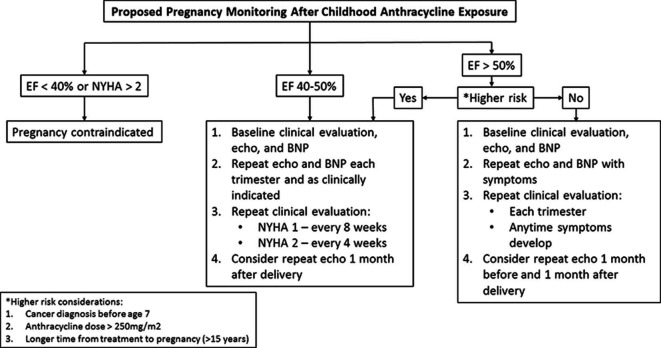
This case highlights the challenge of managing acute cardiac decompensation in a non-cardiac district general hospital, where access to specialist cardiology support may be limited. Acute heart failure in pre-eclampsia is multifactorial, and distinguishing transient dysfunction from peripartum cardiomyopathy or anthracycline-related cardiotoxicity is difficult. Although ventricular function normalised, cardiac magnetic resonance imaging may identify subclinical disease. This case supports consideration of antenatal cardiac screening in patients with prior anthracycline exposure, as proposed in this algorithm [2].
Acknoledgments
The authors thank the obstetric, anaesthetic and intensive care teams involved in this patients care.