

Poster no: 098
Poster no: 098
098
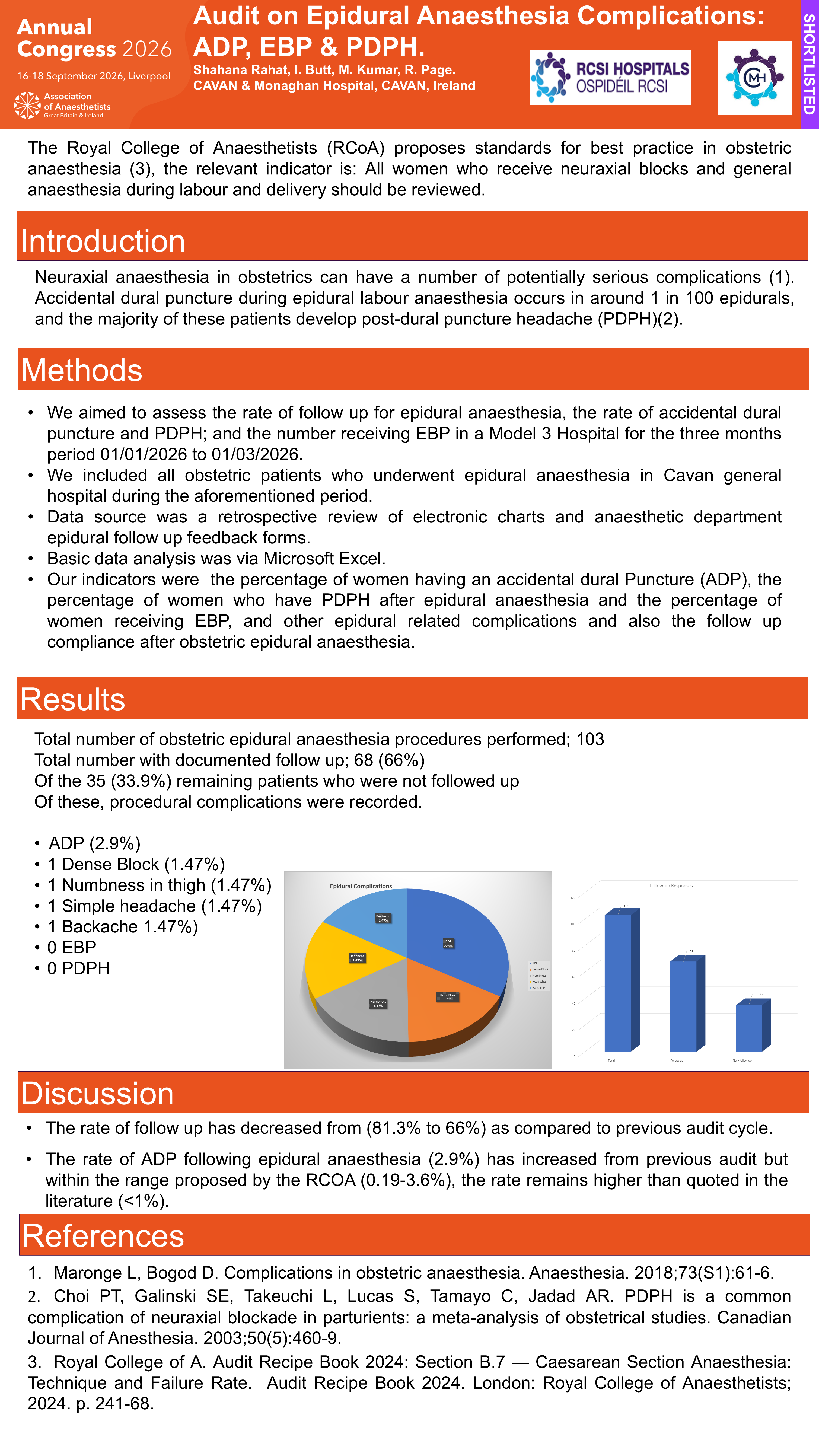
This Re-audit evaluates obstetric neuraxial anaesthesia practices in Cavan General Hospital over a three-month period (01 October–31 December 2025), following a previous audit (2025-51). The aim was to assess compliance with Royal College of Anaesthetists (RCOA) standards, specifically rates of post-procedure follow-up, accidental dural puncture (ADP), post-dural puncture headache (PDPH), and use of epidural blood patch (EBP).
Methods
A Retrospective review of 107 obstetric patients who received epidural anaesthesia was conducted using electronic maternity records, anaesthetic follow-up documentation, and theatre registers.
Results
Results showed that 81.3% (n=87) of patients had documented follow-up, representing minimal improvement from the previous cycle but remaining below the 100% standard. Notably, 18.7% (n=20) of cases lacked completed follow-up forms, a significant increase compared to the prior audit. Procedural complications were documented in 12.6% of followed-up patients, including ADP (2.29%), PDPH (2.29%), and partial block (5.7%).
The ADP rate (2.29%) falls within RCOA acceptable ranges but exceeds the <1% rate commonly cited in literature. No patients required EBP, representing a decrease from the previous audit. Identified gaps include inconsistent documentation and incomplete adherence to follow-up protocols, potentially influenced by staff turnover during the July changeover period.
Discussion
In conclusion, while complication rates remain acceptable, compliance with follow-up standards are suboptimal. Targeted interventions, including staff education and reinforcement of documentation practices, have been implemented. A re-audit is planned to assess the impact of these measures and ensure continuous quality improvement in line with best practice standards.