

Poster no: 148
.PNG )
Poster no: 148
148
The (WHO Surgical Safety Checklist sign-in phase) is designed to confirm patient identity, procedure, consent, and key clinical information before anaesthesia [1]. As the last opportunity to identify potential risks, it plays a vital role in patient safety. In practice, however, it is not always carried out consistently. This audit aimed to assess compliance with sign-in standards and explore factors affecting its reliability in obstetric theatres [2].
Methods
A prospective audit of consecutive cases was conducted over four weeks. Observations focused on timing of sign-in (before or after induction), team involvement, environmental conditions (including noise levels), use of two-person identity checks, patient participation, and whether all checklist questions were completed. Compliance was recorded as percentages. A staff questionnaire was also used to identify perceived barriers.
Results
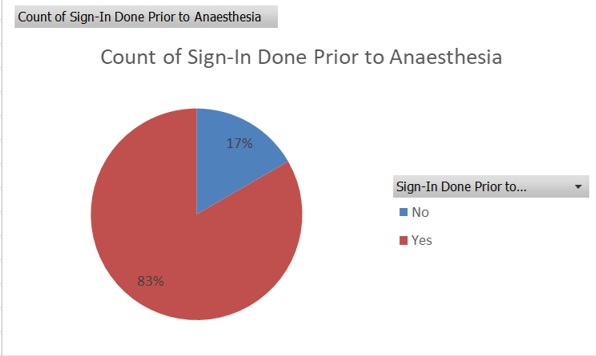
Twenty four cases were analysed. Sign-in was performed in 80% of cases, but full completion of all checklist elements was achieved in only 24%. A quiet environment was present in 56% of cases. Two-person identity checks were completed in 88%, while all checklist questions were asked in just 24%, suggesting frequent omissions with notable reduction of participation of the surgeon despite the local policy. Commonly reported barriers included interruptions, time pressure, and a perception that the checklist had become a routine "tick-box" task.
Discussion
Although sign-in was often performed, its quality and consistency were variable. Gaps were mainly related to incomplete checklist use, limited team engagement, and distractions within the theatre environment. The absence of the lead surgeon during sign-in also appeared to affect team coordination. Following targeted interventions, including reinforcing team roles and promoting sign-in during handovers and governance meetings, re-audit (24 cases) showed improvement in timing (>90%), quieter environments (>60%), and overall team participation. Further work should focus on reducing noise, improving engagement, standardising processes in obstetric theatres, and exploring digital solutions such as Badger-Net to support documentation and compliance.
Acknowledgements
Thanks to the obstetric theatre and anaesthetic teams for their support.