

Poster no: 076
Poster no: 076
076
Pain following caesarean section is common and may impair maternal recovery, wellbeing, and ability to care for the newborn. Opioids are frequently used for management; however, lack of specific guidelines contribute to variations in prescribing. This audit evaluates opioid prescribing patterns and pain control at day 7 following lower segment caesarean section (LSCS).
Methods
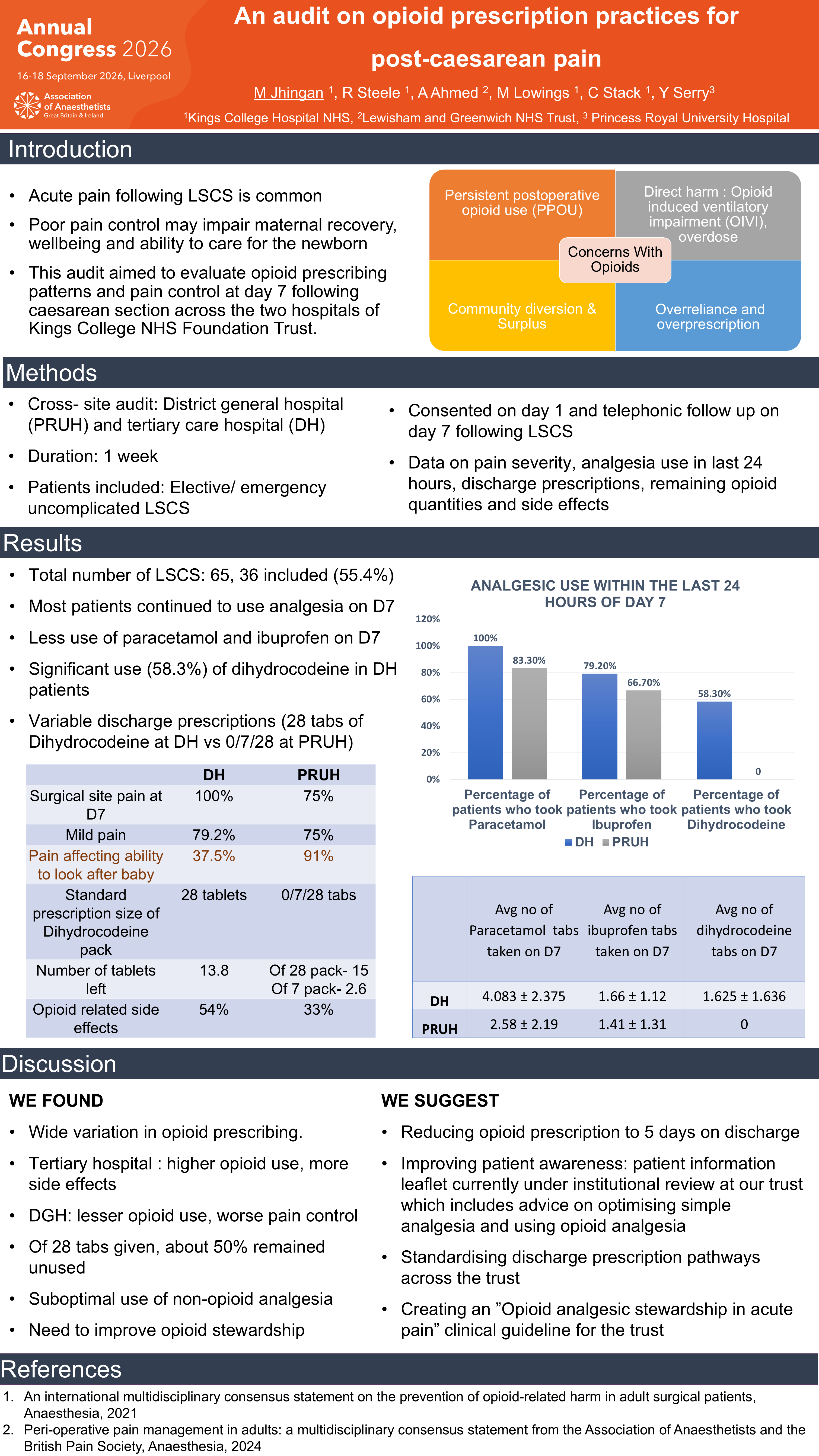
The audit was conducted across two sites- a district general hospital (PRUH) and a tertiary centre (DH) under Kings College NHS Trust. Data was collected over one week for women undergoing uncomplicated elective or emergency LSCS. Participants were consented on postoperative day 1 and followed up via phone on day 7. Data collected included pain severity, analgesia use in the preceding 24 hours, discharge prescriptions, remaining opioid quantities and side effects.
Results
A total of 65 women underwent LSCS during the study period, of whom 36 (55.4%) were recruited. By day 7, over 75% of women at both sites reported mild pain. Most women continued using paracetamol and ibuprofen, but at suboptimal doses. Opioid use varied markedly: 58% at DH continued dihydrocodeine at day 7, compared to none at PRUH. Prescribing practices also differed, with standard 28 tablets given at DH versus variable quantities (0, 7 or 28 tablets) at PRUH. When 28 tablets were prescribed, a mean of 13.8 at DH versus 15 at PRUH remained unused at day 7; and those given 7 tablets had 2.6 remaining. Over 50% of women at DH reported opioid-related side effects, mainly constipation, while over 90% at PRUH reported pain impacting their ability for newborn care.
Discussion
There was wide variation in opioid prescribing and use across both hospitals. Higher opioid use may reflect a more complex patient group in the tertiary centre but was associated with increased side effects. Lower use at the DGH seemed to be associated with worse pain control. Our findings align with existing evidence suggesting opioid prescriptions often exceed requirements, with 40-94% remaining unused [1]. Safe opioid use is essential to minimise harm- including ventilatory depression, persistent postoperative opioid use, misuse and diversion. Most guidelines recommend limiting prescriptions to 3-5 days, but no longer than 7 days [1,2]. Standardised pathways, optimisation of non-opioid analgesia, and improved patient education may help balance effective pain relief with minimisation of harm.
Acknowledgements
We thank Dr Dan Abell for his support.