

Poster no: 065
Poster no: 065
065
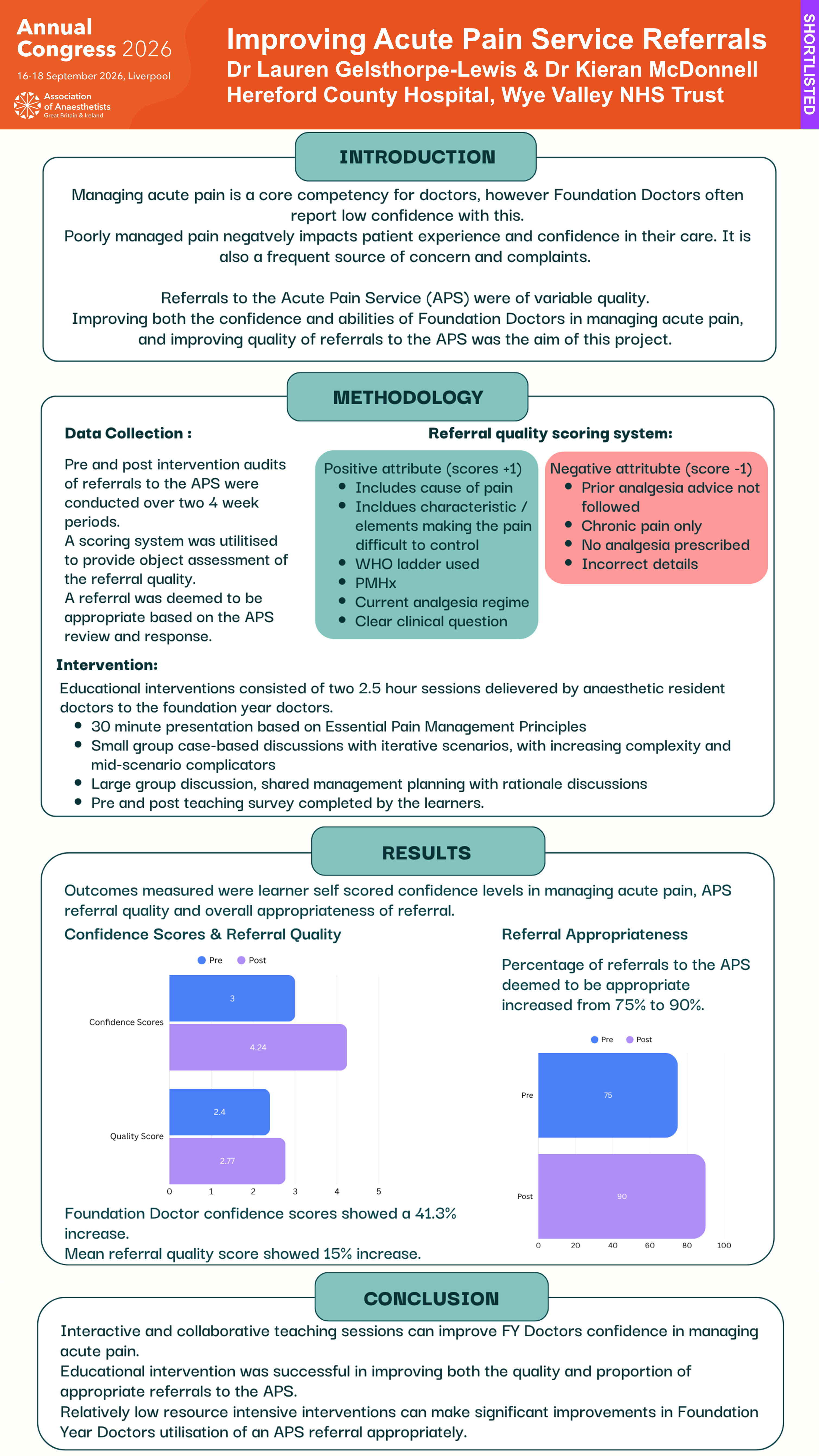
Poorly controlled pain negatively impacts patient experience and satisfaction, and is a frequent source of concern and complaints. Locally, referrals to the acute pain service (APS) were often poor quality, suggesting limited understanding of acute pain management principles and appropriate APS utilisation. Improving pain management education was therefore identified as a priority for patient experience and improving referrals.
Methods
A teaching session was incorporated within the Foundation Programme timetable for FY1 and FY2 doctors. Sessions summarised key principles from the Essential Pain Management programme [1] and were delivered in an interactive, workshop-style format with an emphasis on practical decision-making. APS referrals were reviewed over two four-week periods before and after the intervention. Referral quality was assessed using a structured scoring tool comprising six desirable and four undesirable characteristics, generating an overall referral quality score.
Results
Pre-intervention, 45 referrals were made over four weeks with a mean quality score of 2.4 and 75% deemed appropriate. Post-intervention, 58 referrals were made, representing a 28.9% increase. Mean quality score increased to 2.77 (15% increase), and 90% of referrals were deemed appropriate. Qualitative feedback from foundation doctors demonstrated increased confidence, with Likert scores rising from 3.0 to 4.24 (scale 1–5).
Discussion
Following the intervention, the number of APS referrals increased, demonstrating improved awareness of the service. Mean referral quality scores improved, with referrals showing greater clinical relevance and completeness. Post-teaching referrals demonstrated increased use of WHO pain ladder principles [2]. Interactive, structured pain education was associated with improved APS referral quality and increased resident doctor confidence. This intervention may represent a simple and scalable approach to improving acute pain management and patient experience. Further work could explore sustainability and impact on patient outcomes.