
Poster no: 037
Poster no: 037
037
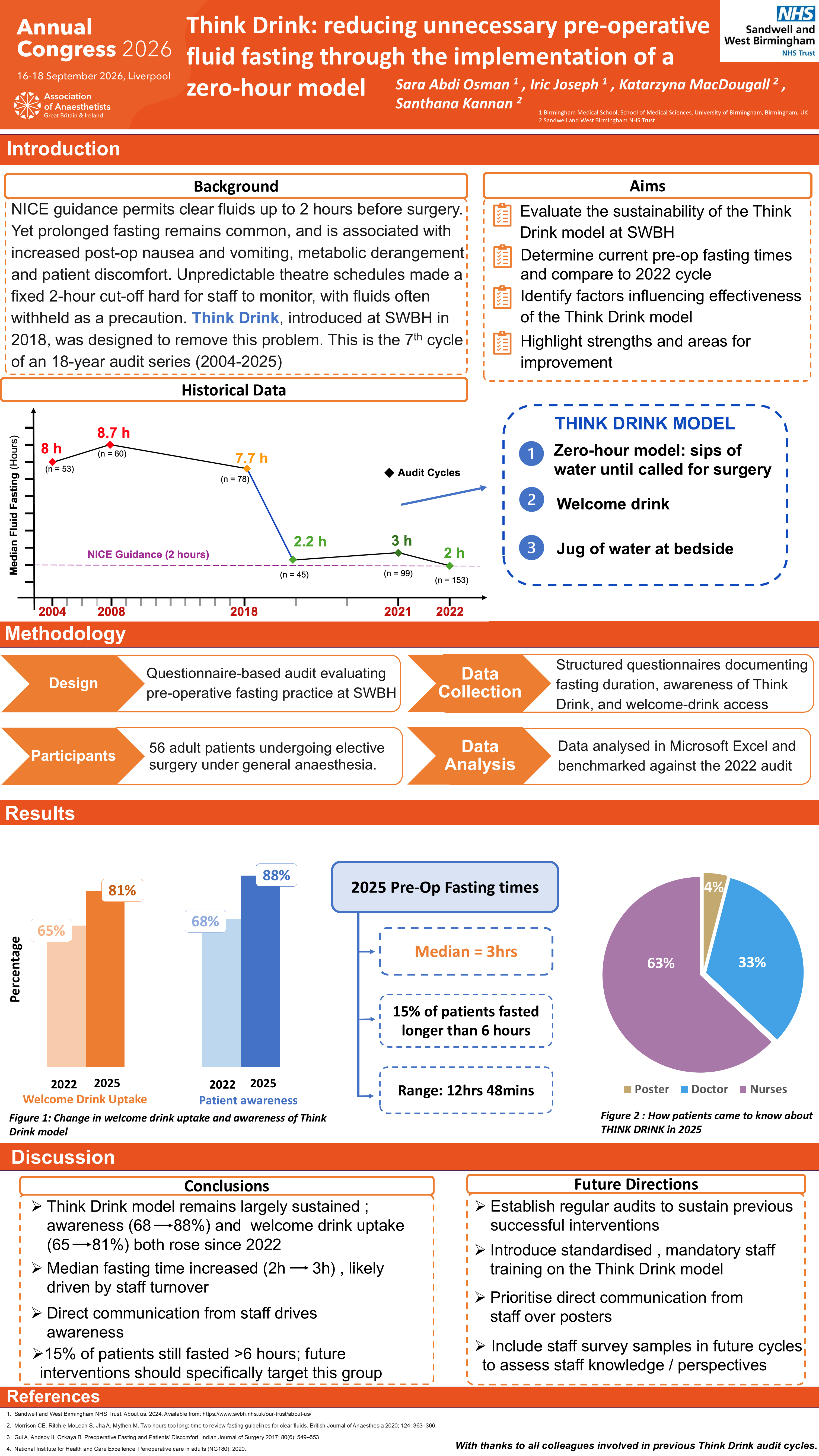
Unnecessary pre-operative fluid fasting has been associated with increased incidence of patient discomfort and post-operative nausea and vomiting [1]. Current NICE guidelines state that a fasting period of 2 hours for clear fluids is permissible prior to surgery [2]. The Think Drink zero-hour model, implemented at Sandwell and West Birmingham NHS trust in 2018, successfully reduced pre-operative fluid fasting times from a median 7.7 hours to 2 hours in 2022. This model, introduced to address historically prolonged fasting times present since 2004, included a welcome drink on arrival, unrestricted sips of water until being called for theatre and bedside access to water.
This project aims to evaluate Think Drink’s continued sustainability in 2025 as part of the multi-year audit series and identify any factors influencing the effectiveness of the model’s interventions.
Methods
An audit of 56 adult patients undergoing elective surgical procedures with general anaesthesia was conducted. Short questionnaires were provided on the day of the surgery. Fasting duration, patient awareness of the model and access to welcome drinks were assessed. Data was analysed via Microsoft Excel and results compared to the 2022 cycle.
Results
In 2025, the median fasting duration was 3 hours (range up to 12h 48min), with 15% of patients fasting longer than 6 hours. Patient awareness of the model rose from 68% in 2022 to 88% in 2025. The proportion of patients receiving a welcome drink increased from 65% to 81%. Regarding patient education, direct staff communication proved significantly more efficient than passive interventions (4% awareness via posters in patient areas compared to 96% via direct staff engagement).
Discussion
The Think Drink model has been largely sustained in 2025, with increased patient awareness illustrating the current durability of the model. However, staff education remains crucial to maintaining compliance. The increase in median fasting times likely reflects staff turnover, as new staff may have less familiarity with the Think Drink model. Embedding Think Drink into mandatory induction training and prioritising direct staff communication could be essential for the model’s future longevity. These findings highlight the importance of regular audit cycles to monitor adherence and ensure consistency.
Acknowledgements
We are deeply appreciative to all colleagues involved in data collection throughout the years.