

Poster no: 040
Poster no: 040
040
Inadvertent peri-operative hypothermia, defined as core temperature below 36°C, is associated with increased morbidity, delayed recovery and reduced patient comfort. NICE CG65 and RCoA guidance recommend routine temperature monitoring and active warming across the peri-operative pathway.
Methods
A prospective audit of 50 consecutive surgical patients was conducted at University Hospital Waterford using a structured proforma. Compliance was assessed across preoperative, intra-operative and postoperative phases against NICE CG65 and RCoA standards. Key measures included documented temperature measurement, use of active warming, warming of intravenous fluids where indicated, and postoperative temperature monitoring. A PDSA-based quality improvement plan was developed to guide interventions and re-audit.
Results
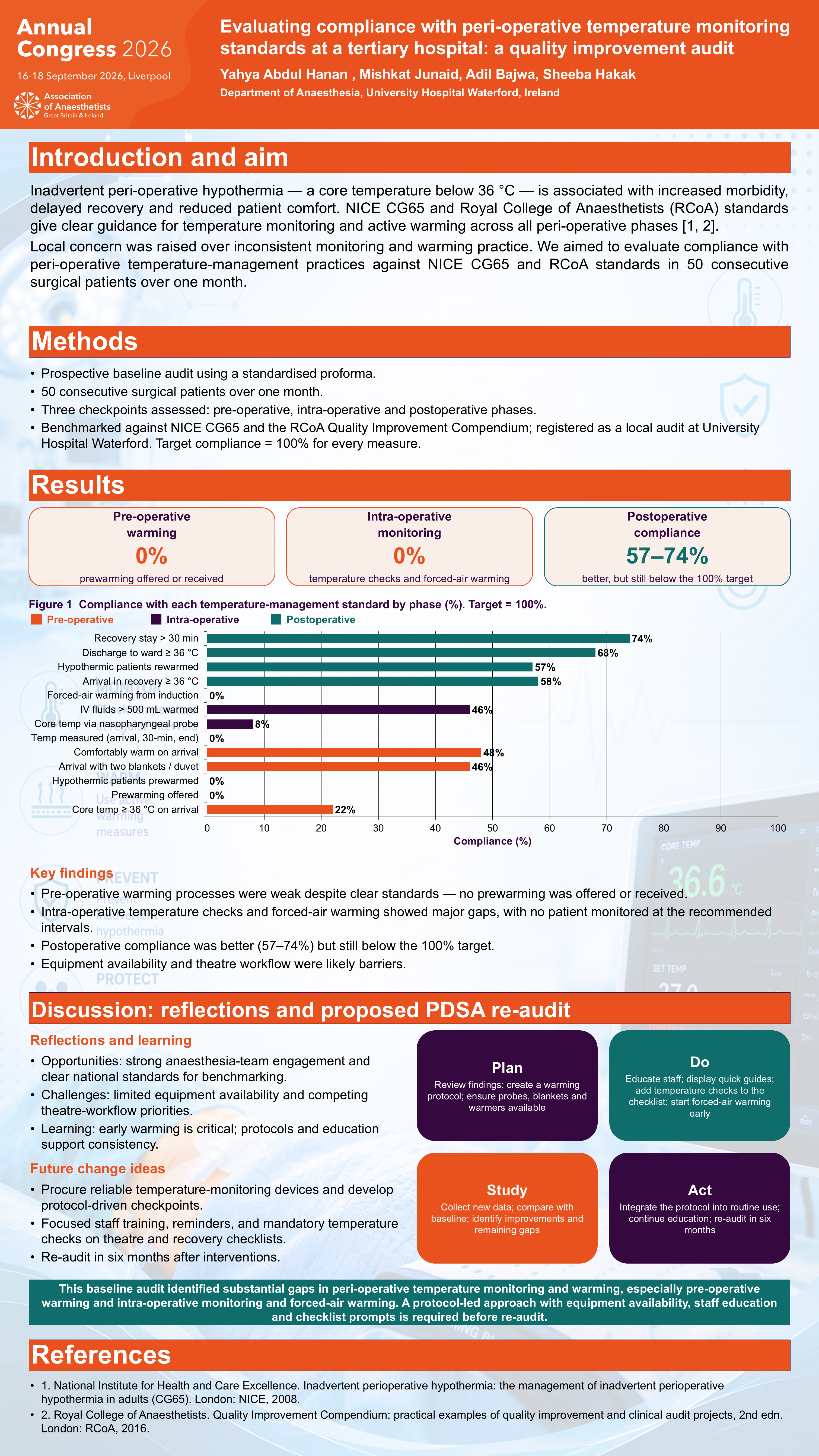
Compliance varied across the perioperative pathway. Pre-operative temperature documentation was 22%, prewarming was not offered, and 46% of hypothermic patients received warming. Intraoperatively, temperature was not measured at the recommended intervals, core temperature was monitored with appropriate probes in 8%, intravenous fluids were warmed in 46%, and forced-air warming was not initiated at induction. Postoperatively, 58% had temperature documented on arrival to recovery, 57% of hypothermic patients were actively rewarmed, 68% had temperature documented before ward discharge, and 74% had recovery stay longer than 30 minutes.
Discussion
This audit identified significant gaps in adherence to peri-operative temperature monitoring and warming standards, particularly during the intraoperative phase. Proposed interventions include staff education, protocol-driven checklists, improved access to warming devices and temperature probes, and display of quick-reference guidance in clinical areas. A closed-loop re-audit is planned to assess improvement in compliance and patient safety.
Acknowledgements
The authors thank the anaesthetic and peri-operative teams for their support.