

Poster no: 124
Poster no: 124
124
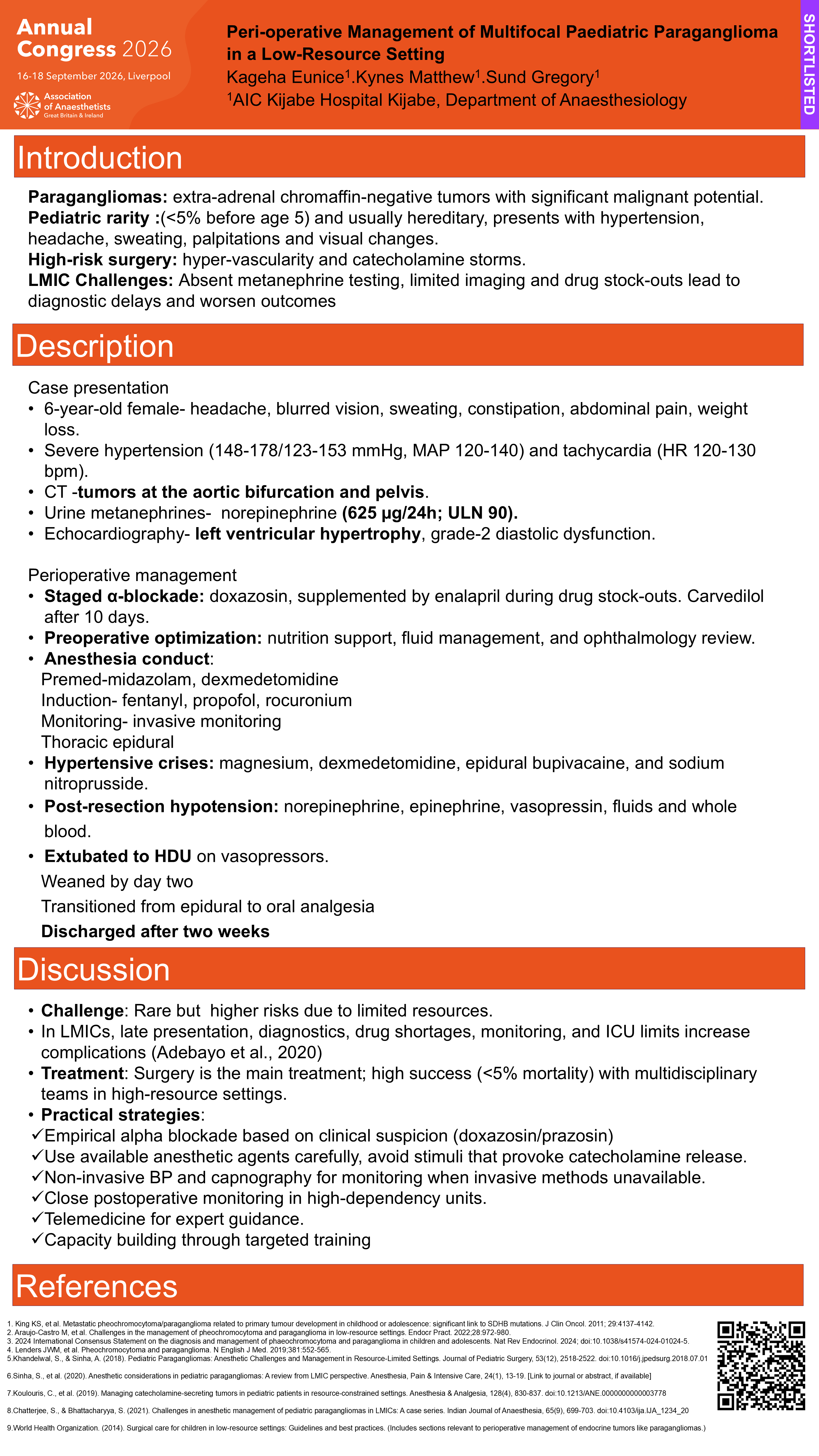
Paragangliomas are extra-adrenal chromaffin-negative tumours with significant malignant potential. Paediatric cases are rare (<5% before age 5) and usually hereditary, presenting with hypertension, headache, sweating, palpitations, and growth failure. Surgery is definitive but high risk due to hypervascularity, vessel adherence, and catecholamine storms, requiring staged α/β-blockade, invasive monitoring, and experienced anaesthesia. In low and middle income countries (LMICs), limited diagnostics and drug stockouts delay diagnosis and worsen outcomes.
Description
A six year old female presented with headache, blurred vision, sweating, abdominal pain, and weight loss. She had severe hypertension (148–178/123–153 mmHg) and tachycardia (HR 120–130 bpm). CT revealed tumours at the aortic bifurcation and pelvis. Urine metanephrines showed elevated norepinephrine (625 µg/24 h; ULN 90). Echocardiography demonstrated LV hypertrophy, grade-2 diastolic dysfunction, and LVEF 57%. α-blockade with doxazosin was escalated; enalapril supplemented during stockouts; carvedilol added after 10 days. Optimisation included nutrition, fluids, and ophthalmology review. Anaesthesia comprised midazolam/dexmedetomidine premedication, fentanyl/propofol/rocuronium induction, invasive monitoring, and thoracic epidural. Hypertensive crises during induction and tumour handling were managed with magnesium, dexmedetomidine, epidural bupivacaine, and sodium nitroprusside. Post resection hypotension required norepinephrine, epinephrine, vasopressin, fluids, and whole blood. She was extubated to HDU on vasopressors, weaned by day 2, and discharged after 2 weeks.
Discussion
Despite LMIC constraints, structured α/β-blockade, low cost intraoperative vasodilators, and timely vasopressor support enabled safe paediatric paraganglioma resection [1]. Where biochemical and radiological testing is unavailable, clinical suspicion can guide empirical alpha blockade using accessible agents such as doxazosin or prazosin. Careful agent titration and avoidance of catecholamine provoking stimuli are essential. Non-invasive BP monitoring and capnography can supplement clinical assessment where invasive monitoring is limited. Close postoperative HDU care and multidisciplinary collaboration including telemedicine with tertiary centres are key to improving LMIC outcomes [2].
Acknowledgements
We thank the surgical, nursing, and HDU teams at AIC Kijabe Hospital for their dedication to this patient's care.