
Poster no: 050
Poster no: 050
050
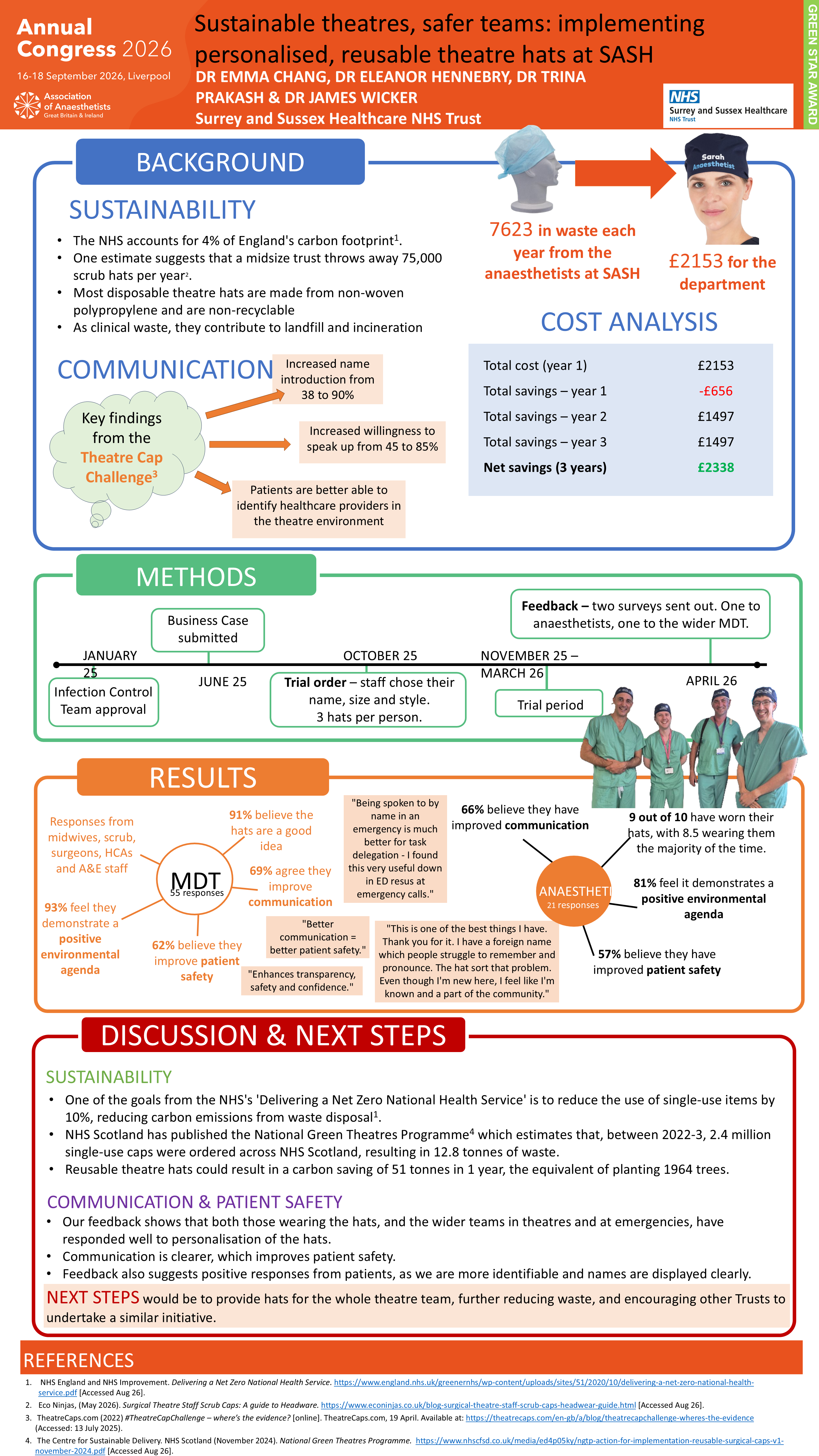
The transition from disposable to reusable theatre hats has been shown to have several benefits including improved communication and sustainability covering both financial and environmental domains.The Theatre Cap Challenge [1], initiated by Dr Rob Hackett, encouraged staff to display their name and role on theatre hats, increasing name and role introductions from 38% to 90% and the propensity to speak up from 45% to 85%. Given the ample evidence that the type of theatre hat worn is not associated with surgical site infections [2], we believe the advantages of introducing reusable theatre hats outweigh the disadvantages.
Methods
Each permanent anaesthetic staff member was provided with three personalised theatre hats. After 3 months of use, we conducted a survey of anaesthetists, to assess opinions and compliance of theatre hat use. A second survey was sent to the wider MDT, as part of project expansion feasibility and planning.
Results
Our initial survey of anaesthetic staff confirmed 85.7% of respondents wear their theatre hats over 75% of the time, with the main barrier to more regular use being the at-home laundry requirement. Encouragingly, 66% of participants felt they improved communication, 57% felt they improved patient safety and 81% felt the initiative demonstrated a positive environmental agenda. One anaesthetist noted that personalisation was particularly valuable when attending infrequently visited areas—such as ED, paediatrics, and maternity—especially during emergencies.These results are reflected in the responses from the MDT which included midwives, ODPs, A&E staff, HCAs and surgeons.
Discussion
The introduction of personalised theatre hats has been met with widespread enthusiasm among anaesthetists and the broader theatre team. Uptake has been strong, with most anaesthetists incorporating them into routine practice. Across both surveys, respondents reported positive contributions to patient safety and enhanced communication within the team. In addition, reusable theatre hats support waste reduction, aligning with the Trust’s sustainability objectives. A logical next step will be to extend the initiative to include all other theatre staff to maximise the communication and sustainability benefits at our hospital.