

Poster no: 091
Poster no: 091
091
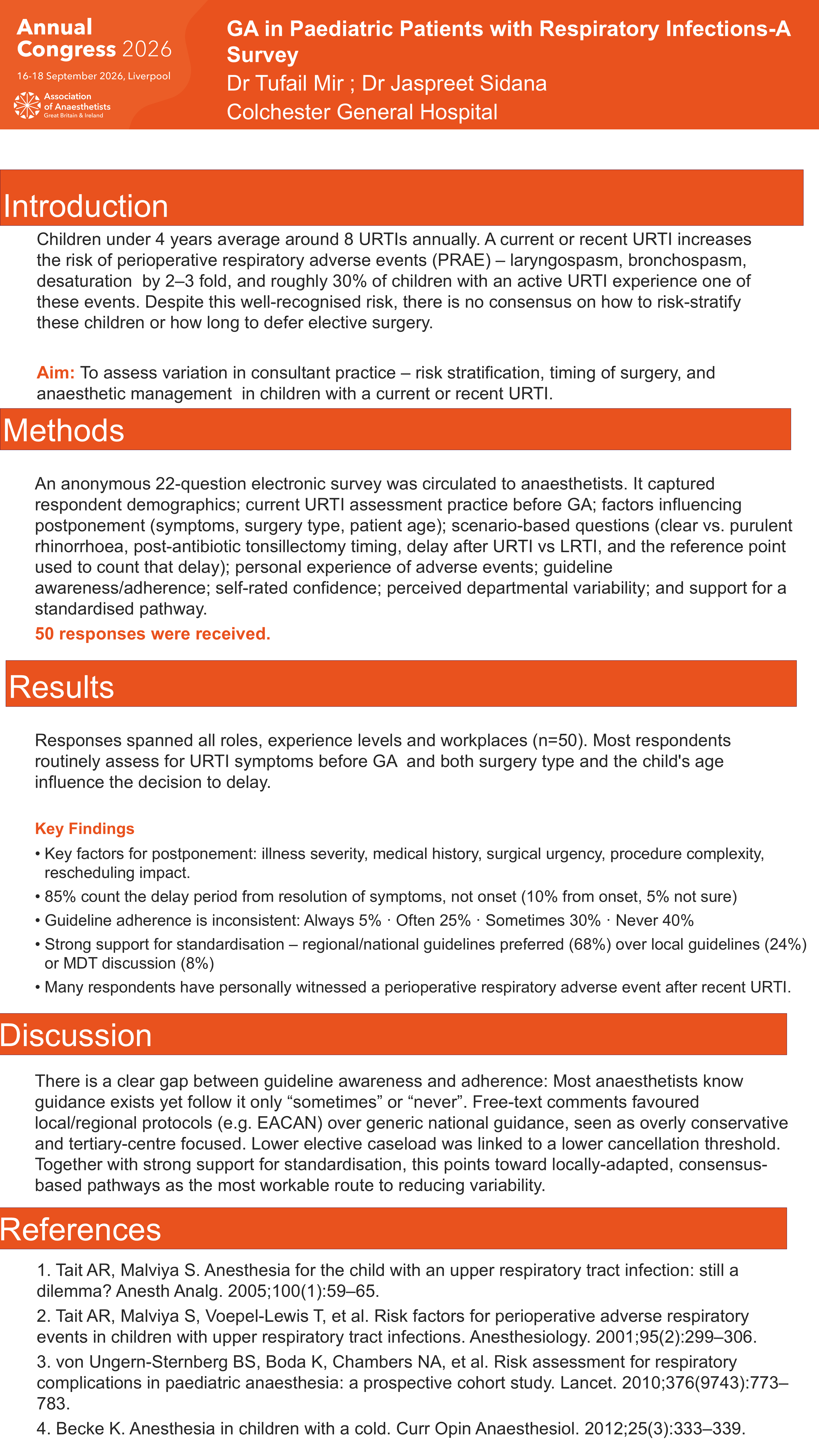
Upper respiratory tract infections (URTIs) in children are associated with an increased risk of peri-operative respiratory adverse events. However, decision-making regarding proceeding with general anaesthesia remains variable, with limited consensus on optimal management.
Methods
An anonymised electronic survey (regional east of England ) was distributed to senior anaesthetists practising paediatric anaesthesia to assess current practices in managing paediatric patients with URTIs. The survey explored factors influencing decision-making, timing of surgery, perceived risks, and awareness of guidelines.
Results
A total of 50 responses were received, of which 42 were consultant anaesthetists.
There was significant variability in clinical practice:
Approaches to timing of surgery following URTI varied widely, with no clear consensus.
Importantly, 74% (37/50) supported the development of standardised guidelines to improve decision-making.
Discussion
This survey demonstrates substantial variation in the management of paediatric patients with URTIs among anaesthetists. Limited awareness of guidelines and inconsistent practices highlight the need for clear, evidence-based recommendations and improved risk stratification tools to support safer and more consistent peri-operative care.