

Poster no: 090
Poster no: 090
090
Anaemia affects over a third of major surgical patients and independently predicts postoperative morbidity and mortality [1]. The CPOC 2025 guideline emphasises early identification, haematinic investigation, and a patient blood management (PBM) approach. This audit evaluated compliance in operative periprosthetic fracture management, a high-risk emergency cohort.
Methods
A retrospective audit of 42 operative periprosthetic fracture cases was performed at St Peter's Hospital (Jan-Dec 2025). Electronic health records were reviewed. Prevalence of preoperative anaemia, haematinic testing, preoperative transfusion, intraoperative tranexamic acid (TXA) use, cell salvage, and estimated blood loss (EBL) were assessed and benchmarked against CPOC 2025 standards. Anaemia was defined as Hb <130 g/L in men and <120 g/L in women [1].
Results
25/42 patients (59.5%) were anaemic on admission. In anaemic patients, haematinic testing was absent in 13/25 (52%). 10/42 patients received preoperative transfusion, of whom 8/10 met the local threshold (Hb <100 g/L). None met the NICE restrictive threshold (Hb ≤70 g/L).[2] TXA was administered in 100% of cases. Cell salvage was used in 6/42 (14%) cases. EBL was documented in 41/42 cases with a mean of 844 mL (range 200-2500 mL).
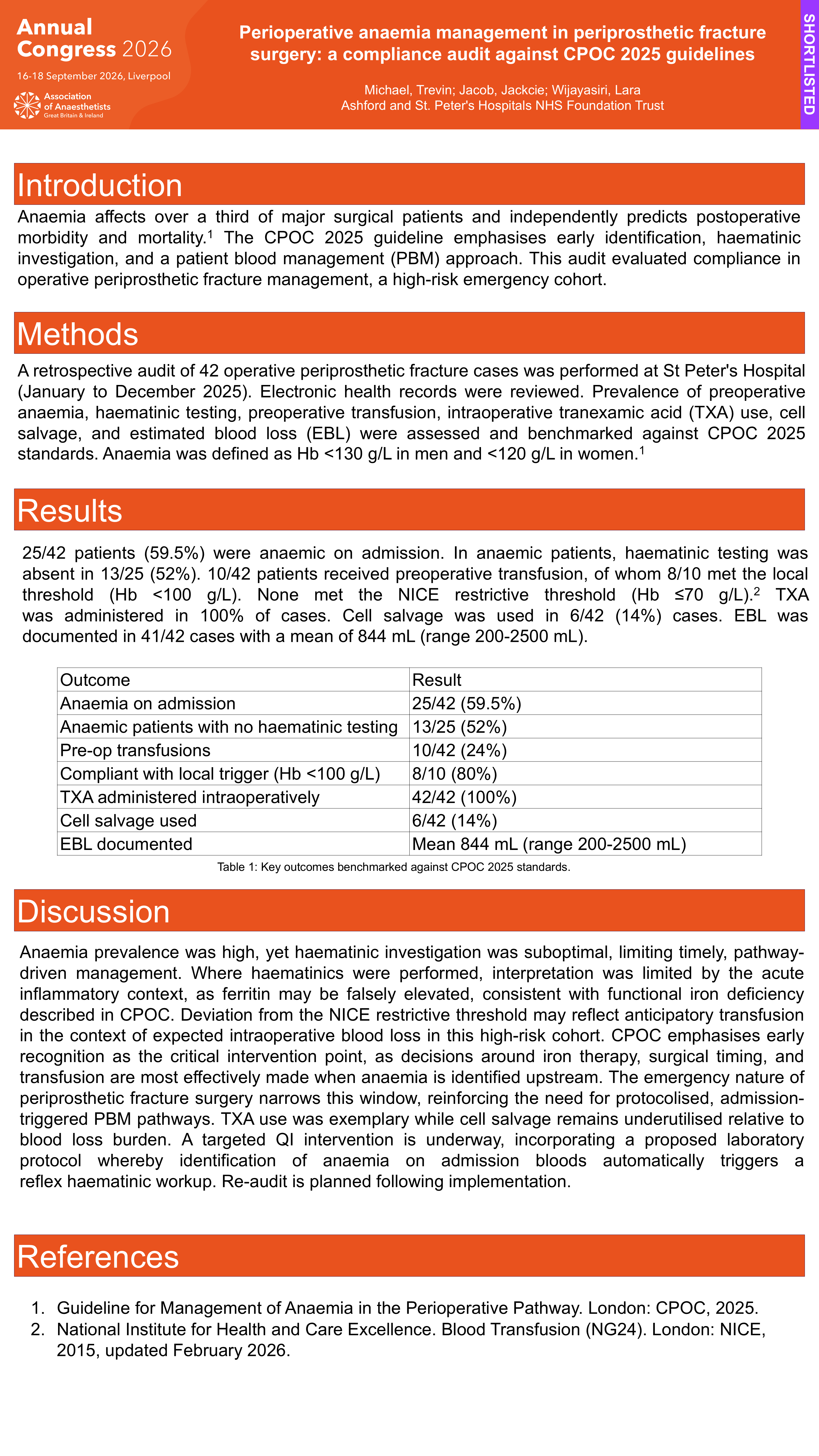
Table 1. Key outcomes benchmarked against CPOC 2025 standards
Outcome Result Anaemia on admission 25/42 (59.5%) Anaemic patients with no haematinic testing 13/25 (52%) Pre-op transfusions 10/42 (24%) Compliant with local trigger (Hb <100 g/L) 8/10 (80%) TXA administered intraoperatively 42/42 (100%) Cell salvage used 6/42 (14%) EBL documented Mean 844 mL (range 200-2500 mL)
Discussion
Anaemia prevalence was high yet haematinic investigation was suboptimal, limiting timely, pathway-driven management. Where haematinics were performed, interpretation was limited by the acute inflammatory context, as ferritin may be falsely elevated, consistent with functional iron deficiency described in CPOC. Deviation from the NICE restrictive threshold may reflect anticipatory transfusion in the context of expected intraoperative blood loss in this high-risk cohort. CPOC emphasises early recognition as the critical intervention point, as decisions around iron therapy, surgical timing, and transfusion are most effectively made when anaemia is identified upstream. The emergency nature of periprosthetic fracture surgery narrows this window, reinforcing the need for protocolised, admission-triggered PBM pathways. TXA use was exemplary while cell salvage remains underutilised relative to blood loss burden. A targeted QI intervention is underway, incorporating a laboratory protocol whereby identification of anaemia on admission bloods automatically triggers a reflex haematinic workup. Re-audit is planned following implementation.