

Poster no: 055
Poster no: 055
055
Local Safety Standards for Invasive Procedures in Critical Care (LocSSIPs) were developed to promote safe practice in common invasive procedures performed outside of the operating theatre [1]. The Faculty of Intensive Care and the Intensive Care Society produced LocSSIP safety checklists in 2017 designed to mirror the style of the World Health Organization Safer Surgery Checklist [1,2]. This two-stage audit aimed to collect data on the completion of LocSSIP checklist forms at Pinderfields General Hospital for six critical care procedures: bronchoscopy, central venous catheter line insertion, chest drain insertion, intubation, lumbar puncture and tracheostomy insertion.
Methods
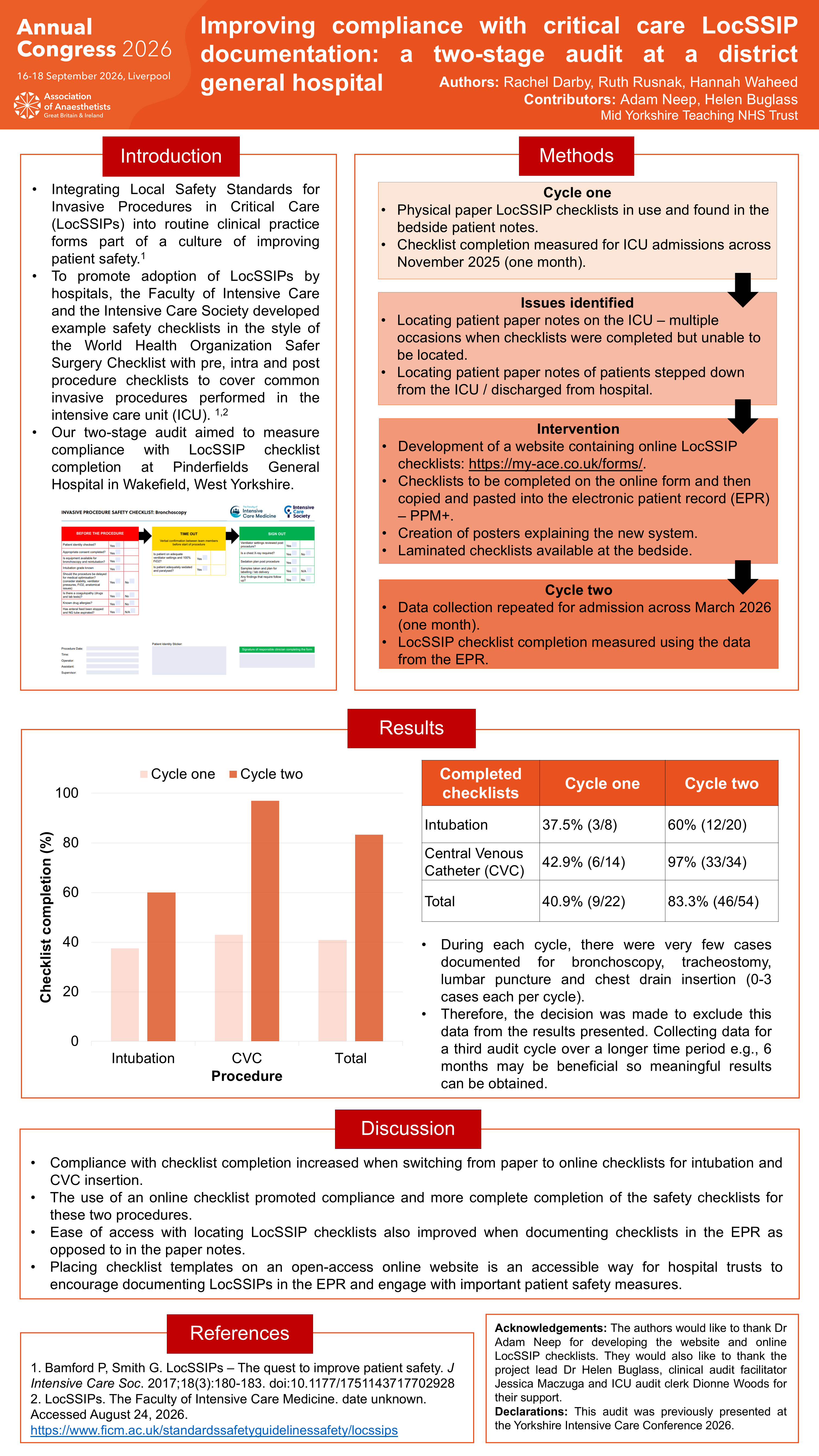
Data was collected on LocSSIP checklist completion for patients admitted to the ICU for two audit cycles in November 2025 and March 2026. The first cycle audited checklist completion within paper patient notes and the second cycle audited online checklists in the electronic patient record (EPR). Following the first cycle, checklists were switched from paper to online forms on a website with staff asked to upload completed checklists to the EPR. Posters explaining the new system were distributed in key areas and laminated checklists were made available for use at the bedside prior to completion online.
Results
The first audit cycle highlighted clear evidence of poor compliance with checklist completion with less than 50% of procedures having a completed checklist. Locating physical paper notes presented a recurring challenge as checklists believed to be completed were not found. There were additional difficulties locating notes once the patient was discharged from the ICU. Preliminary data analysis of the second audit cycle suggests a strong improvement in checklist compliance with completed LocSSIP checklists for over 70% of procedures audited.
Discussion
Findings clearly suggest that the switch from paper to online checklists was successful in improving compliance with checklist completion. The use of an online website with online checklist templates presents a novel, accessible way for hospital trusts to document LocSSIPs in the EPR and promotes engagement with important patient safety measures.
Acknowledgements
The authors would like to thank Dr Adam Neep for developing the website and online LocSSIP checklists. They would also like to thank the project lead Dr Helen Buglass, clinical audit facilitator Jessica Maczuga and Dionne Woods ICU audit clerk for their support.