
Poster no: 042
Poster no: 042
042
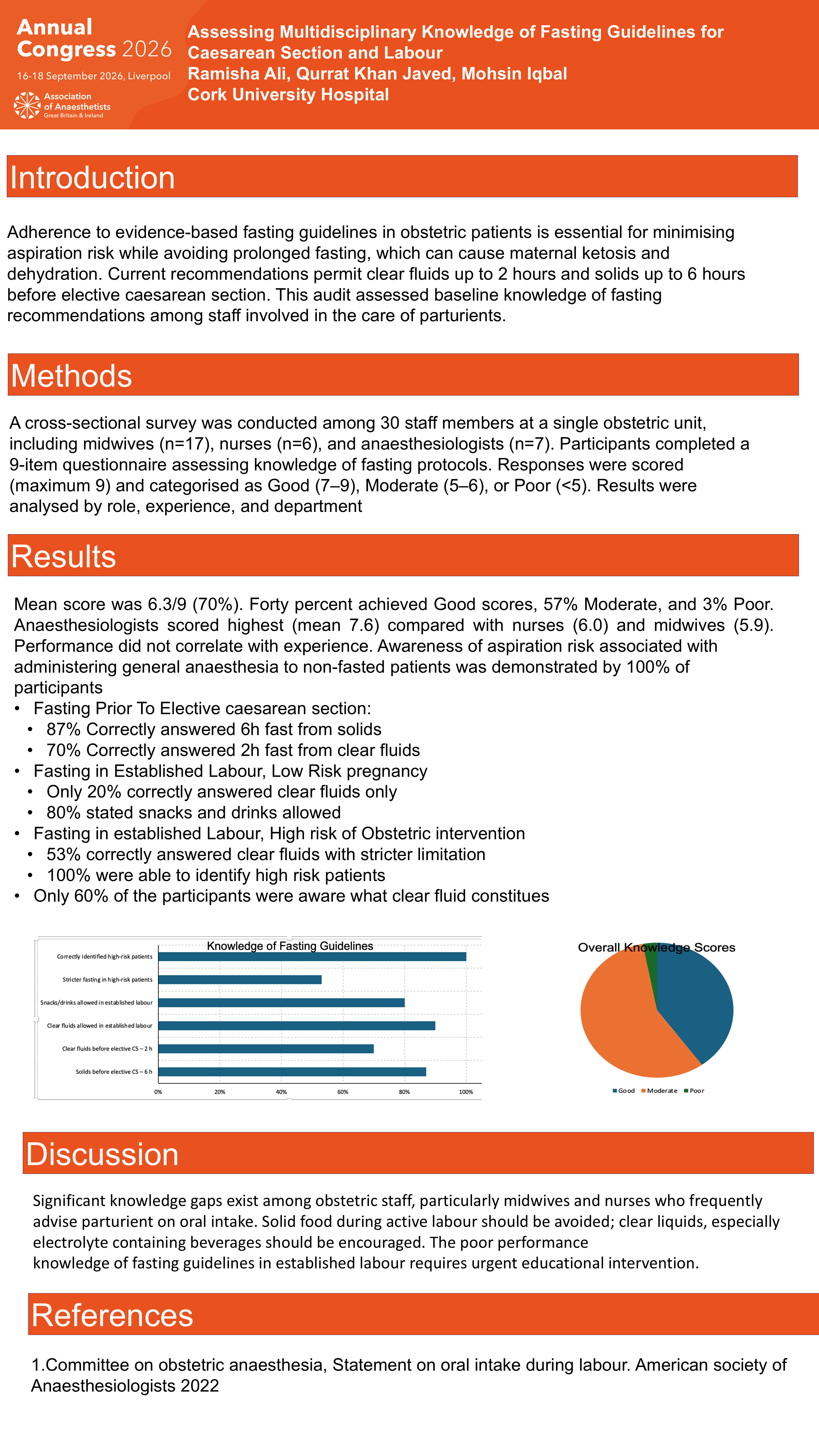
Adherence to evidence-based fasting guidelines in obstetric patients is essential for minimising aspiration risk while avoiding prolonged fasting, which can cause maternal ketosis and dehydration. Current recommendations permit clear fluids up to 2 hours and solids up to 6 hours before elective caesarean section. This audit assessed baseline knowledge of fasting recommendations among staff involved in the care of parturients.
Methods
A cross-sectional survey was conducted among 30 staff members at a single obstetric unit, including midwives (n=17), nurses (n=6), and anaesthesiologists (n=7). Participants completed a 9-item questionnaire assessing knowledge of fasting protocols. Responses were scored (maximum 9) and categorised as Good (7–9), Moderate (5–6), or Poor (<5). Results were analysed by role, experience, and department.
Results
Mean score was 6.3/9 (70%). Forty percent achieved Good scores, 57% Moderate, and 3% Poor. Anaesthesiologists scored highest (mean 7.6) compared with nurses (6.0) and midwives (5.9). Performance did not correlate with experience.Awareness of aspiration risk associated with administering general anaesthesia to non-fasted patients was demonstrated by 100% of participants
Fasting Prior To Elective caesarean section:
Fasting in Established Labour, Low Risk pregnancy
Fasting in established Labour, High risk of Obstetric intervention
Only 60% of the participants were aware what clear fluid constitues.
Discussion
Significant knowledge gaps exist among obstetric staff, particularly midwives and nurses who frequently advise parturients on oral intake.Solid food during active labor should be avoided; clear liquids, especially electrolyte containing beverages should be encouraged[1] The poor performance knowledge of fasting guidelines in established labour requires urgent educational intervention. We recommend targeted multidisciplinary education, accessible reference materials, and periodic reassessment with consistent evidence based practice.
Acknowledgements
We thank participating staff and departmental leadership for supporting this audit.