
Poster no: 151
Poster no: 151
151
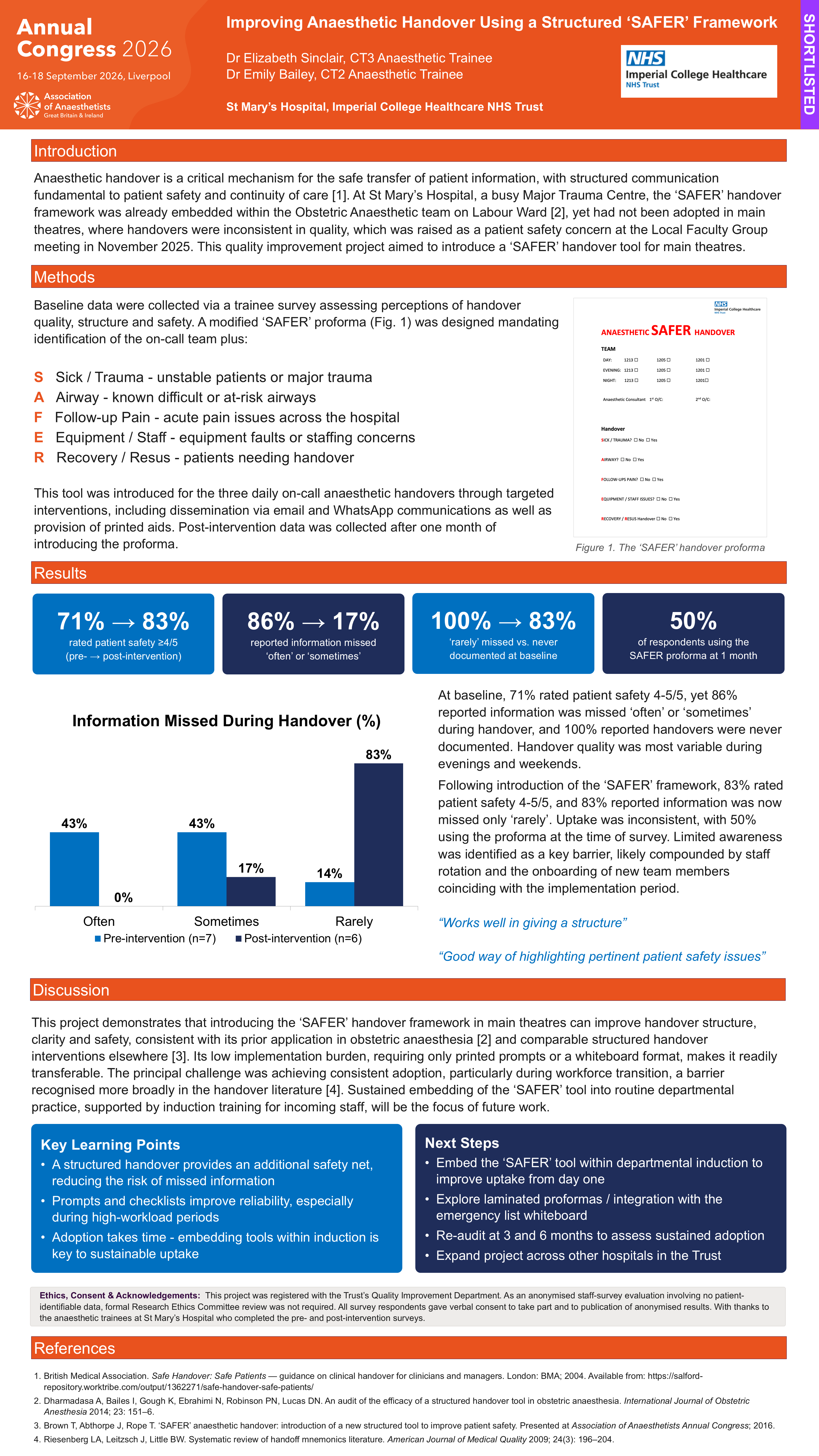
The anaesthetic handover is a critical mechanism for safe transfer of information, with structured communication shown to be fundamental to patient safety [1]. At St Mary’s Hospital, the ‘SAFER’ handover framework was already embedded within the Obstetric Anaesthetic team on Labour Ward [2], yet had not been adopted in main theatres, where handovers were observed to be inconsistent in quality and structure. The aim of this quality improvement project (QIP) sought to address that gap.
Methods
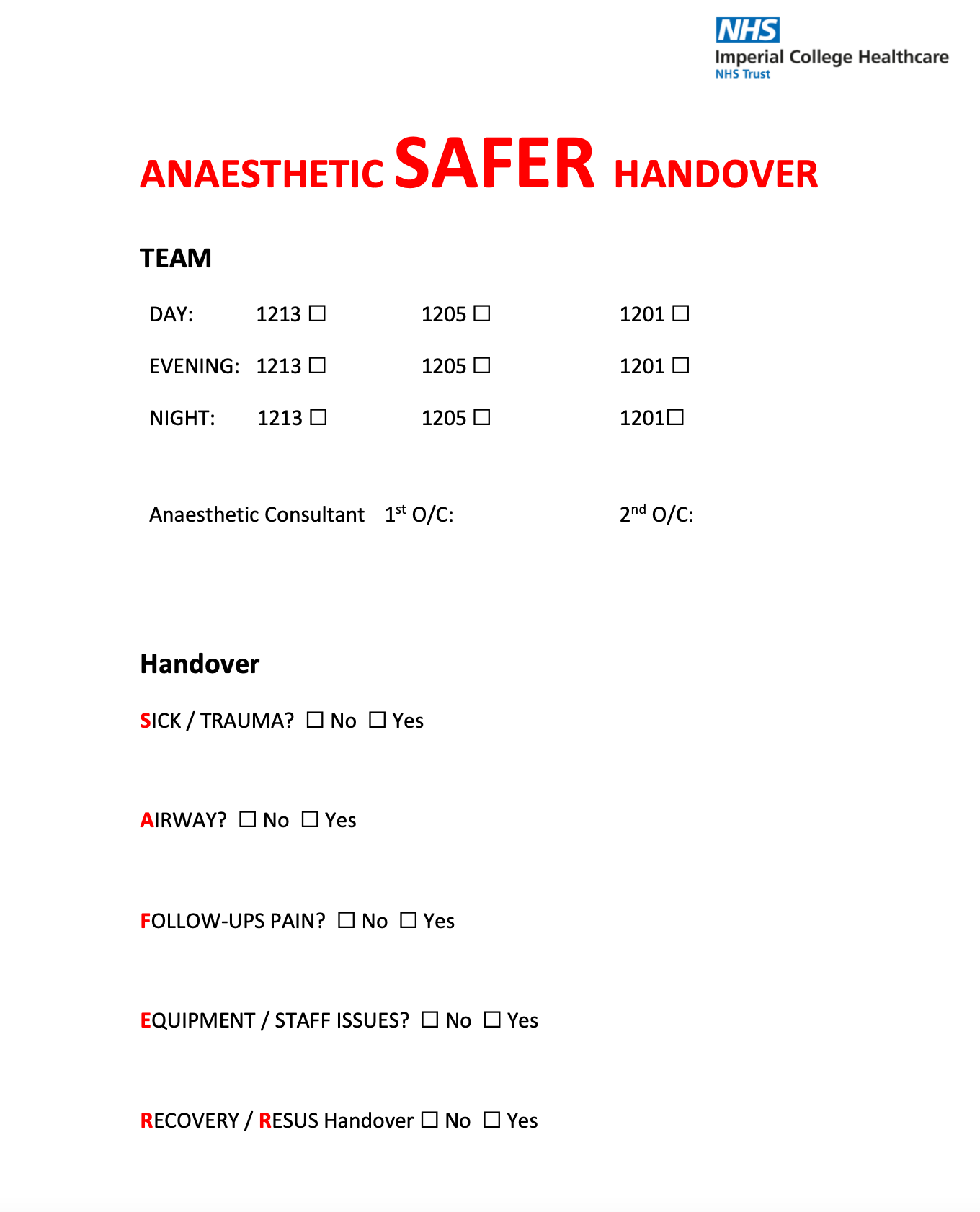
A QIP was conducted in main theatres and baseline data collected via a staff survey assessing perceptions of handover quality and safety. We developed a modified ‘SAFER’ proforma, adapted for main theatres and trauma duties (Fig. 1). This tool was introduced for the three-times-daily on-call anaesthetic handover through targeted interventions, including dissemination via email and WhatsApp communications and provision of printed aids. Post-intervention data was collected after 1 month of introducing the proforma, via a repeat survey using comparable outcome measures.
Results
Baseline data revealed that although 71% of staff rated patient safety highly (4-5/5), 86% reported that important information was missed ‘often or ‘sometimes’ and no handovers were formally documented. Variability was greatest during evenings and weekends due to competing clinical demands.
Following introduction of the SAFER framework, 83% of respondents reported that patient safety was rated 4/5 or above and 83% reported that information was now missed only ‘rarely.’ Qualitative responses highlighted improved structure, clearer identification of high-risk patients and better communication of outstanding tasks. Uptake was inconsistent, with 50% using the proforma at the time of the post-intervention survey. Limited awareness was identified as a key barrier, likely compounded by staff rotation and the onboarding of new team members coinciding with the implementation period.
Discussion
This project demonstrates that the ‘SAFER’ handover framework can improve structure, clarity and safety. The low implementation burden, requiring only printed prompts, makes this approach readily transferable. The challenge identified was achieving consistent adoption, particularly during periods of workforce transition. Sustained embedding of the SAFER tool into routine departmental practice, supported by induction training for incoming staff, will be the focus of future work.