

Poster no: 150
Poster no: 150
150
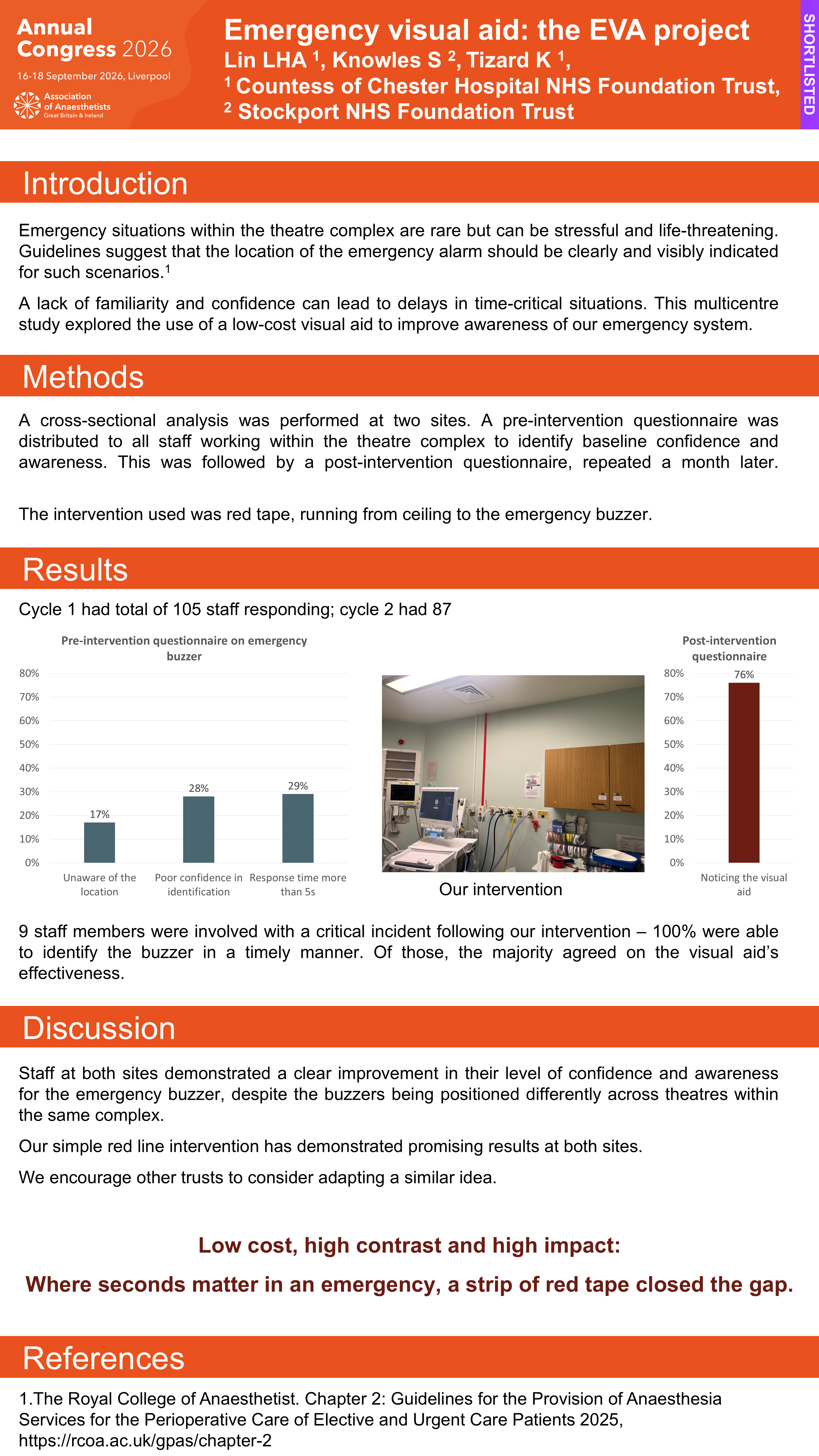
Emergency situations within the theatre complex are rare but can be stressful and life-threatening. The RCOA GPAS guidelines suggests that the location of the emergency alarm should be clearly and visibly indicated for such scenarios [1]. A lack of familiarity and confidence can lead to delays in obtaining urgent assistance. This multi-centred study aims to improve awareness of our emergency system and thereby reduce cognitive workload by the introduction of a low cost visual aid.
Methods
This study was conducted across two district general hospitals within the North West region. A cross-sectional analysis using a pre-intervention questionnaire was distributed to all staff working within the theatre complex to identify baseline confidence and awareness. The intervention was implemented by applying red tape along the wall to increase the visual acuity of the location of the emergency buzzer. A post-intervention questionnaire was repeated a month later.
Results
A total of 111 and 88 staff participated in the pre-intervention and post-intervention questionnaire respectively across the two sites. The pre-intervention questionnaire showed a confidence rating of 34% for the location of the emergency buzzer, of which 50% of this group did not know where the equipment was situated. The repeat survey following intervention demonstrated an increased awareness of the emergency buzzer amongst staff with 74% and 78% in sites one and two respectively.
Discussion
Both sites demonstrated an improved level of confidence and awareness of this vital piece of equipment. There has been over a 50% increase in identifying the location of the buzzer following implementation across the two sites. For individuals that were involved in a critical incident
within the intervention period, all agreed that the visual aid helped locate the buzzer more efficiently and therefore received help earlier. Similar strategies have been conducted in other countries and have shown homogenous results [2].
Discussion
A low-cost intervention improved confidence as well as reassurance to all theatre staff by facilitating the identification of this safety mechanism. Future development includes expanding this project across a nationwide level.